
A unique diversity of know-how
Ring Rolling
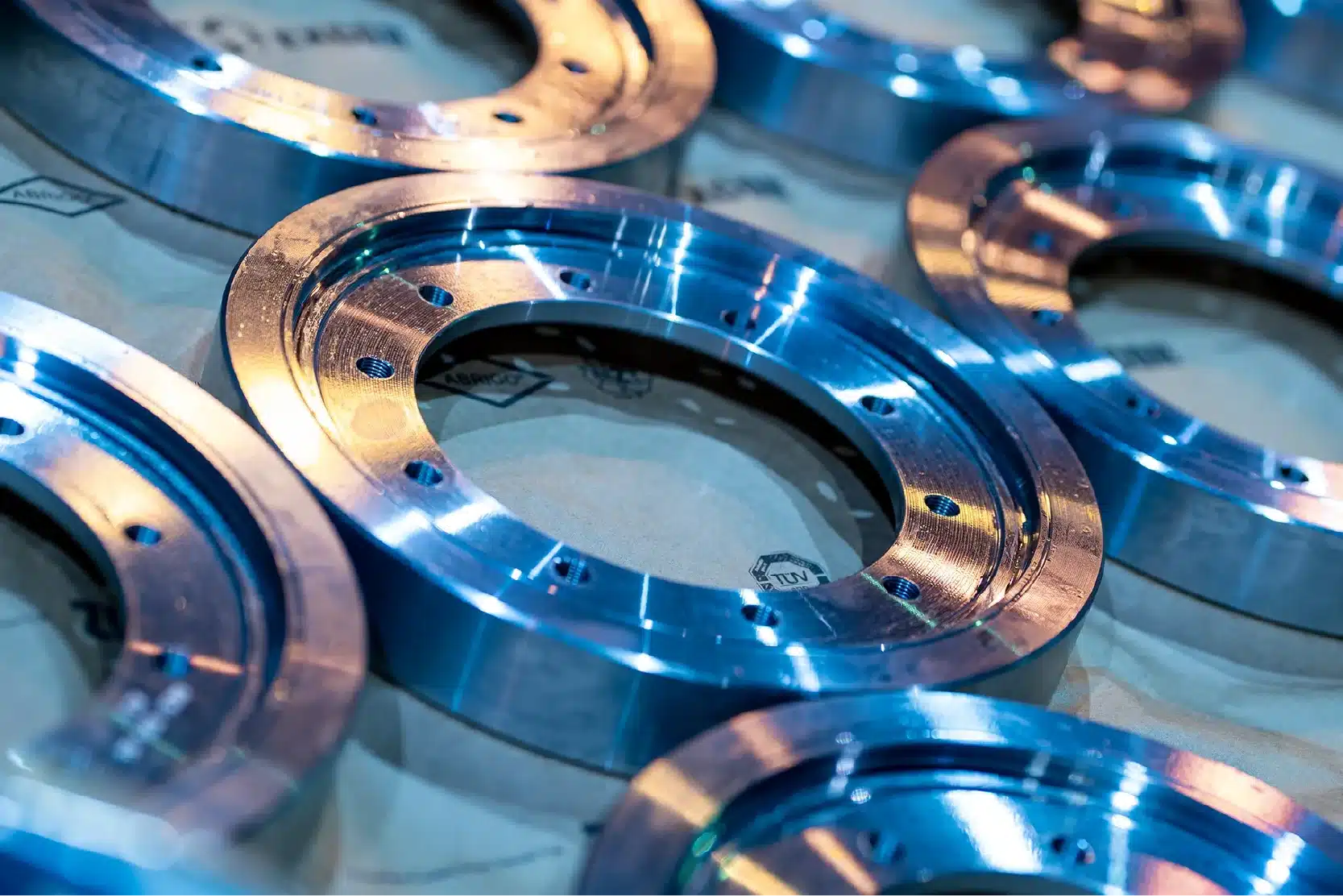
Ring rolling is a hot forming process that transforms a pierced blank into a seamless ring through progressive deformation. The controlled reduction of the wall thickness increases the diameter while maintaining material continuity. The technology produces one-piece components with high metallurgical integrity, circumferential grain flow and a consistent structure. The absence of welds eliminates assembly interfaces and promotes a uniform distribution of properties throughout the ring.
Particularly well suited to automotive and industrial applications, ring rolling produces ring gears, driveline components, bearing rings, turbine elements and various heavily loaded annular parts. The process combines mechanical performance, geometric flexibility and optimized material usage, making it an especially attractive solution for components subjected to heavy, repeated or variable loads.
Seamless ring
Manufacturing
Ring rolling serves sectors that demand strength, consistency and reliability under severe operating conditions. In the automotive industry, it is used for differential ring gears, driveline components and elements of combustion, hybrid and electric drivetrains. The energy and heavy-industry sectors also use rolled rings for bearing rings, housings, flanges and various turbine or machine components. The one-piece construction and circumferential grain flow support their performance under mechanical and thermal loads.
Within Setforge's capabilities, the process produces components with wall-thickness-to-height ratios ranging from 1:16 to 16:1. This range offers great flexibility to match the ring's cross-section to its function and expected loads.
Setforge capabilities
Small, medium and high production volumes
Steel, alloy steel, micro-alloy steel...
Weight up to 12 kg
Diameter up to 250 mm
Manufacturing Process
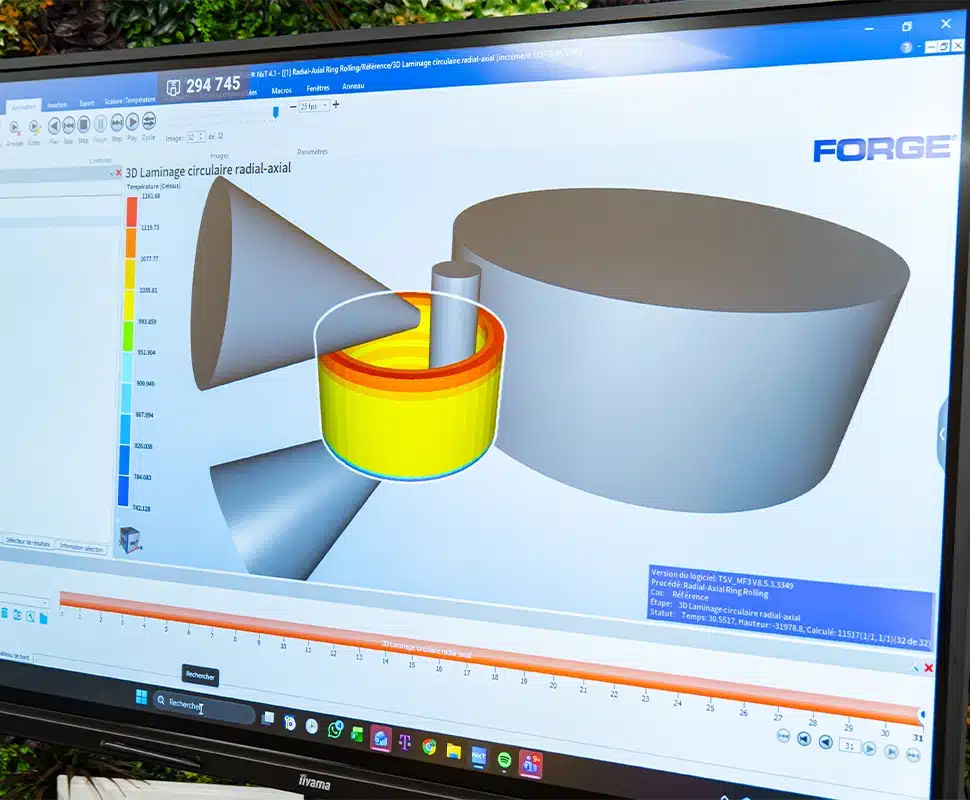
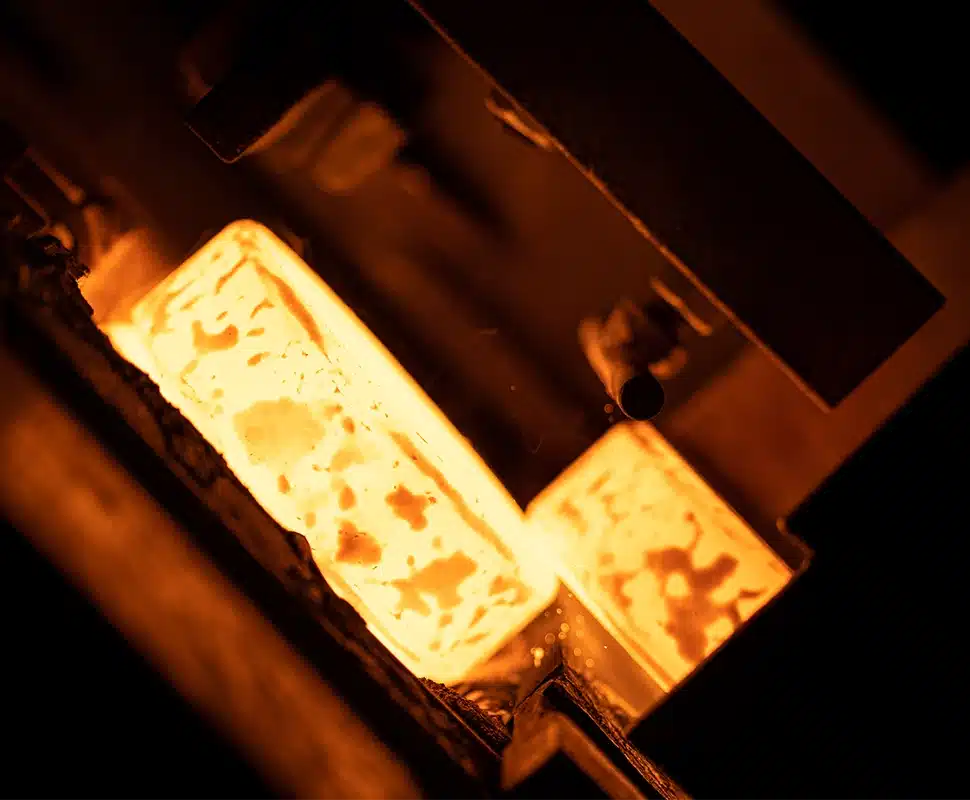
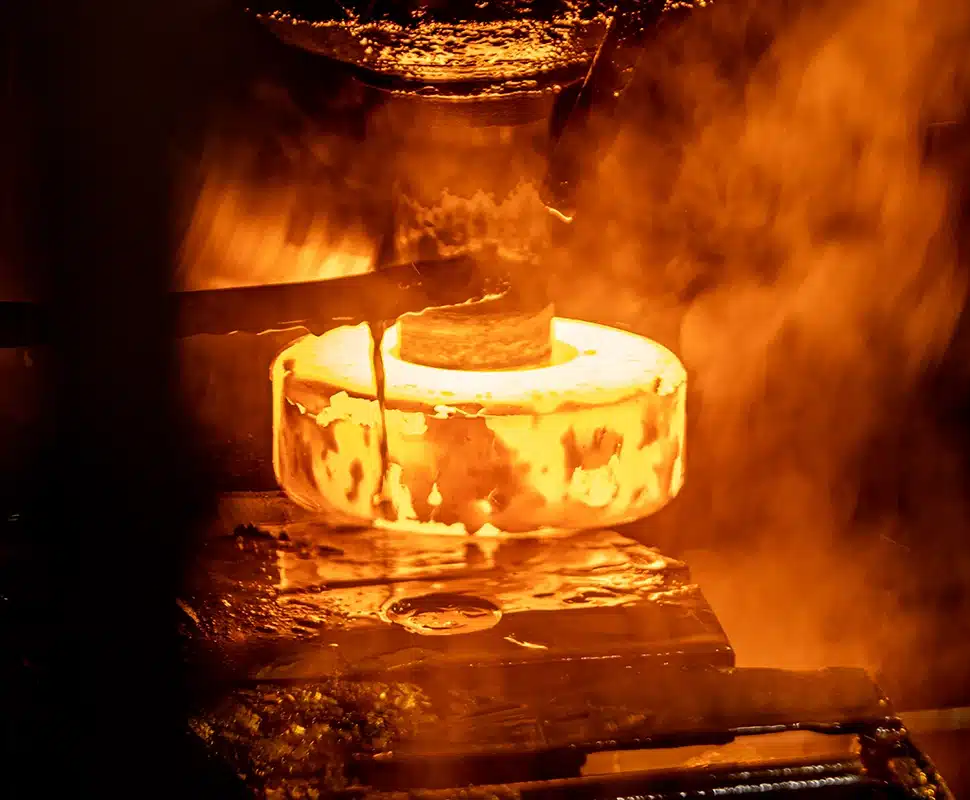
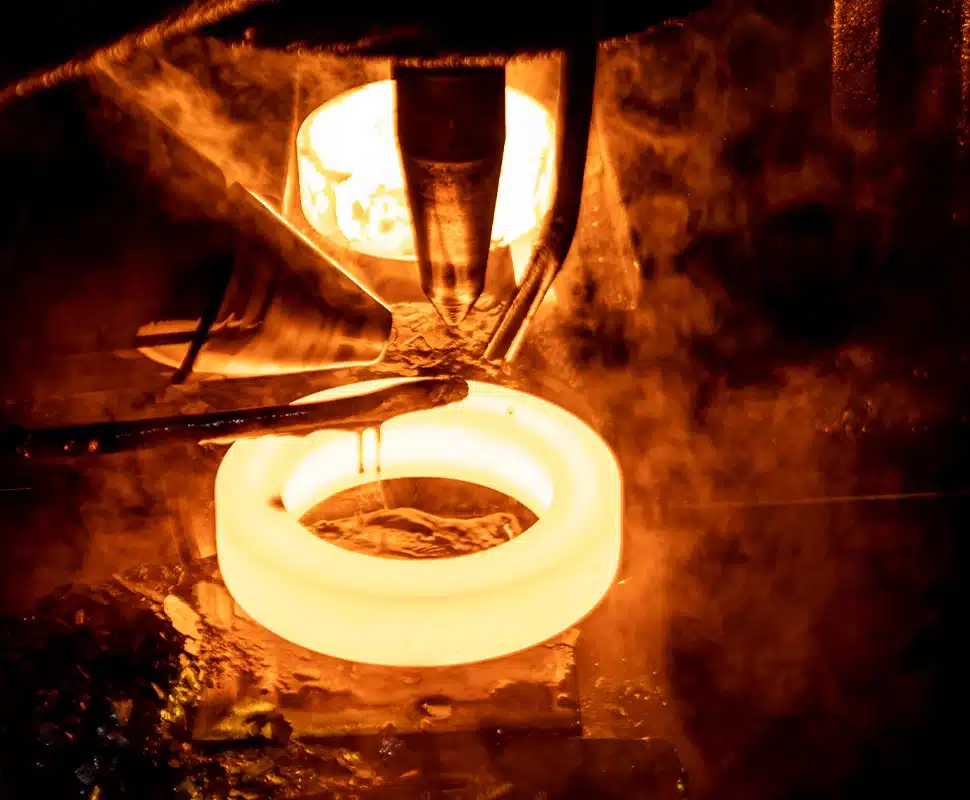
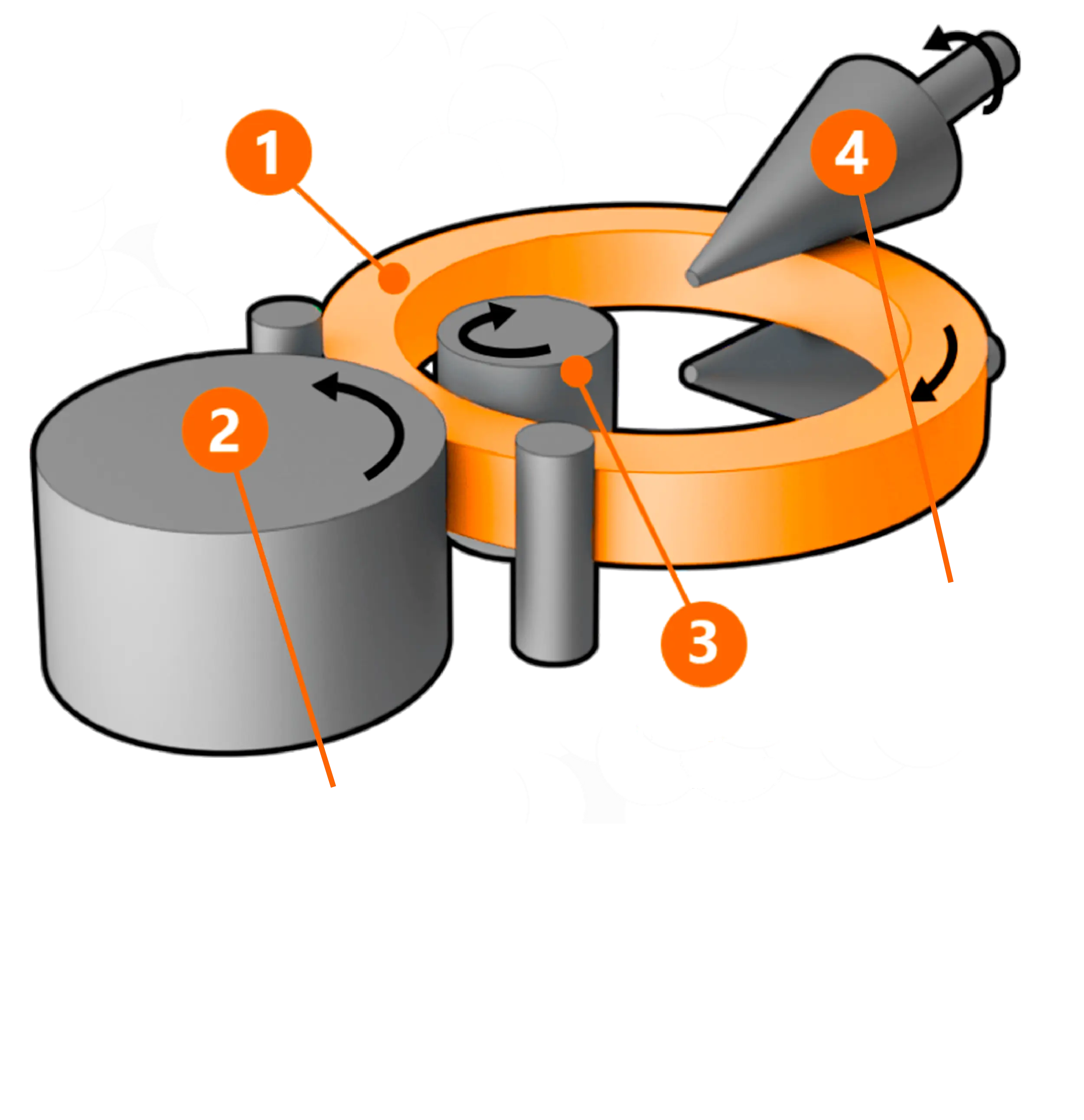
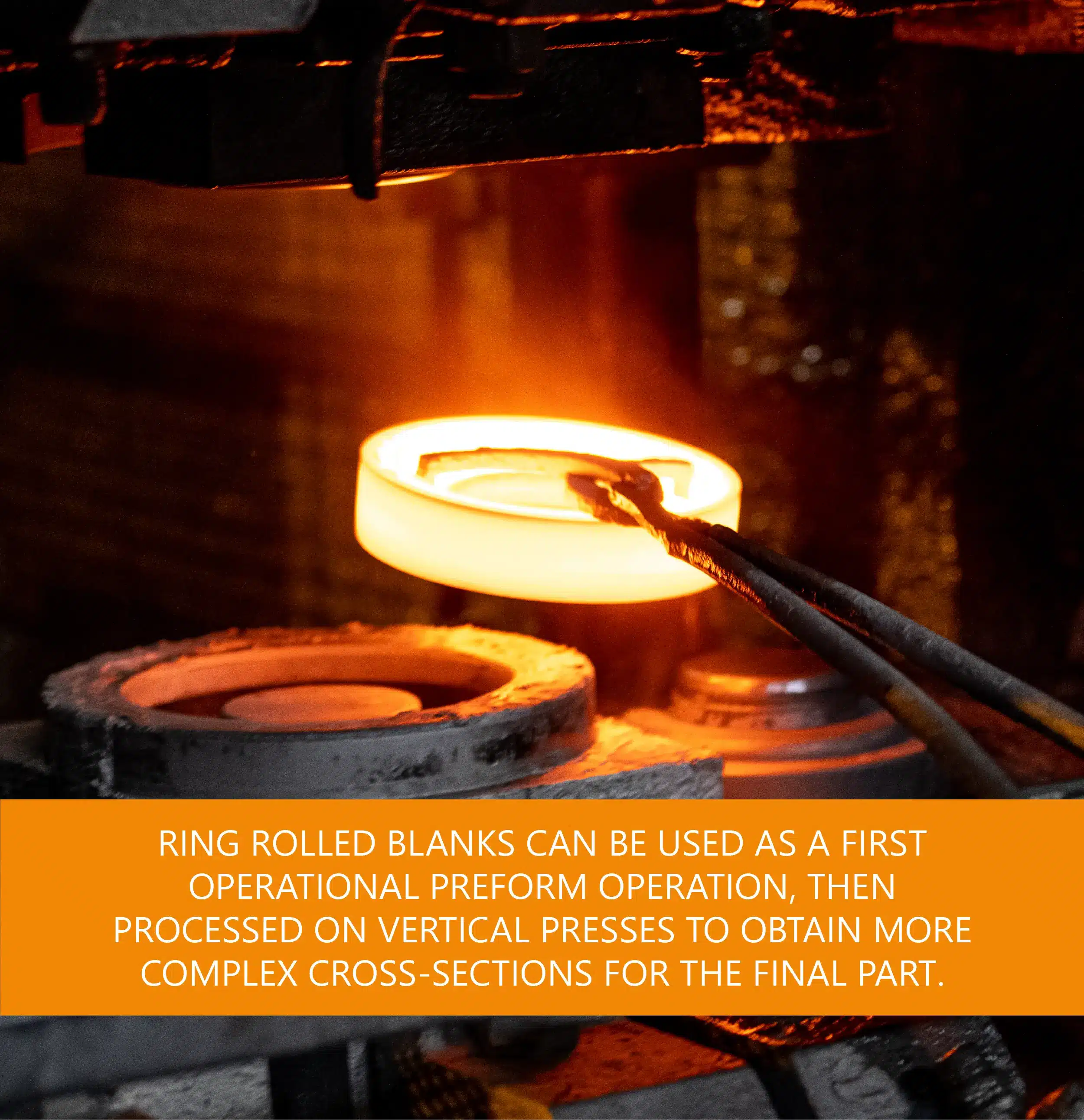
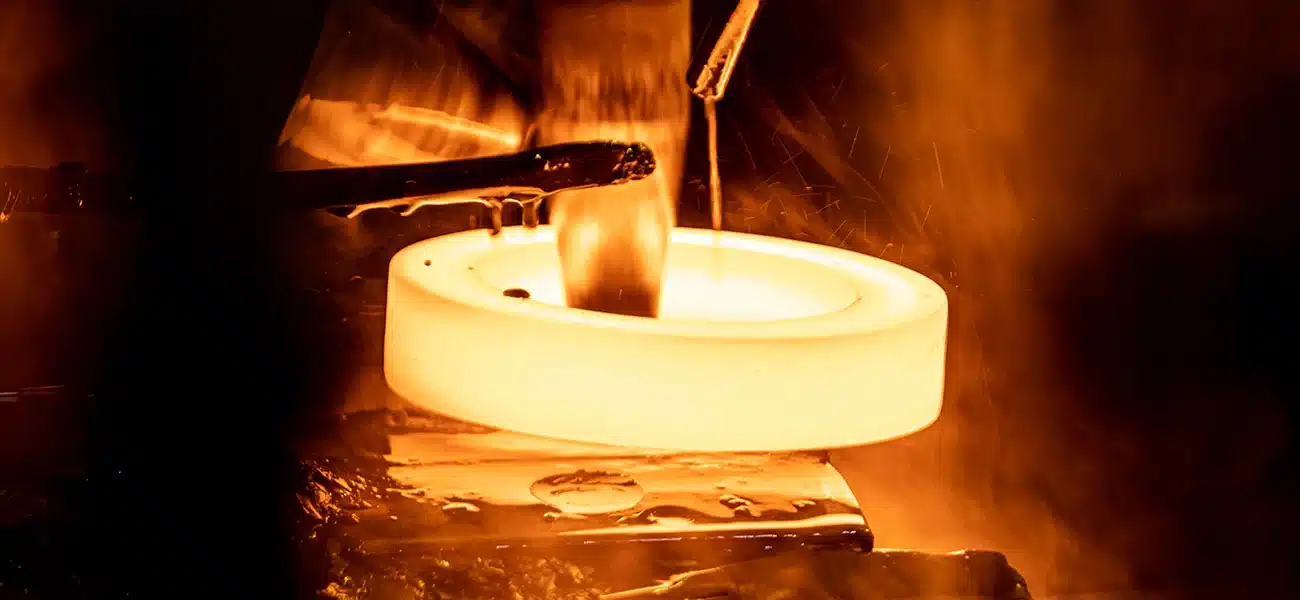
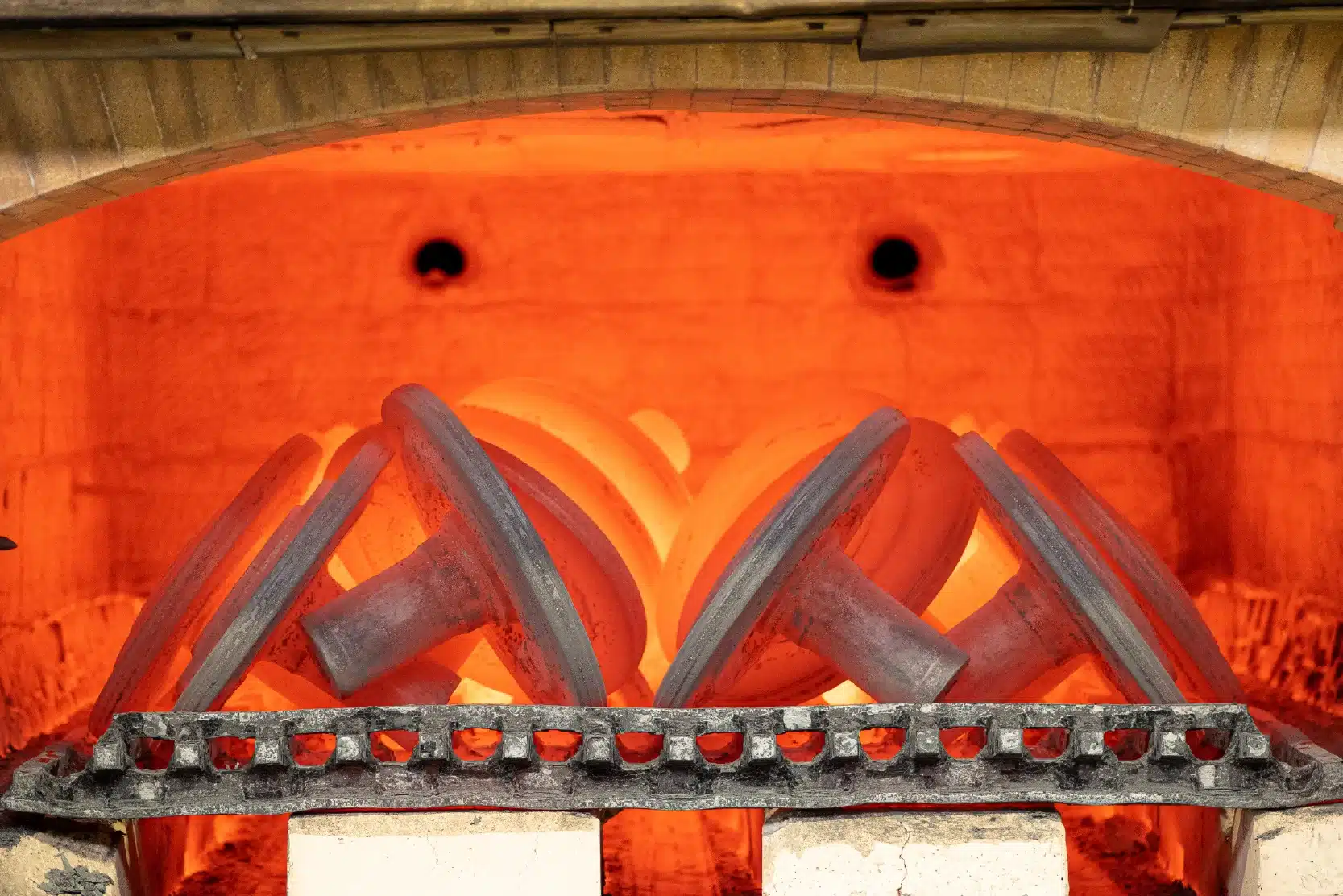
Ring rolling applies to many forgeable materials, including carbon steels, alloy steels, stainless steels and certain superalloys. Heating and deformation parameters are matched to the grade, dimensions and target properties. The process transforms a pierced blank into a ring through a sequence of controlled deformations. The main roll and the mandrel progressively reduce the wall thickness, causing the diameter to grow.
Where the machine configuration allows, axial rolls simultaneously control the ring's height and profile. Coordinating the different axes keeps the dimensional growth under control and produces a uniform distribution of material.
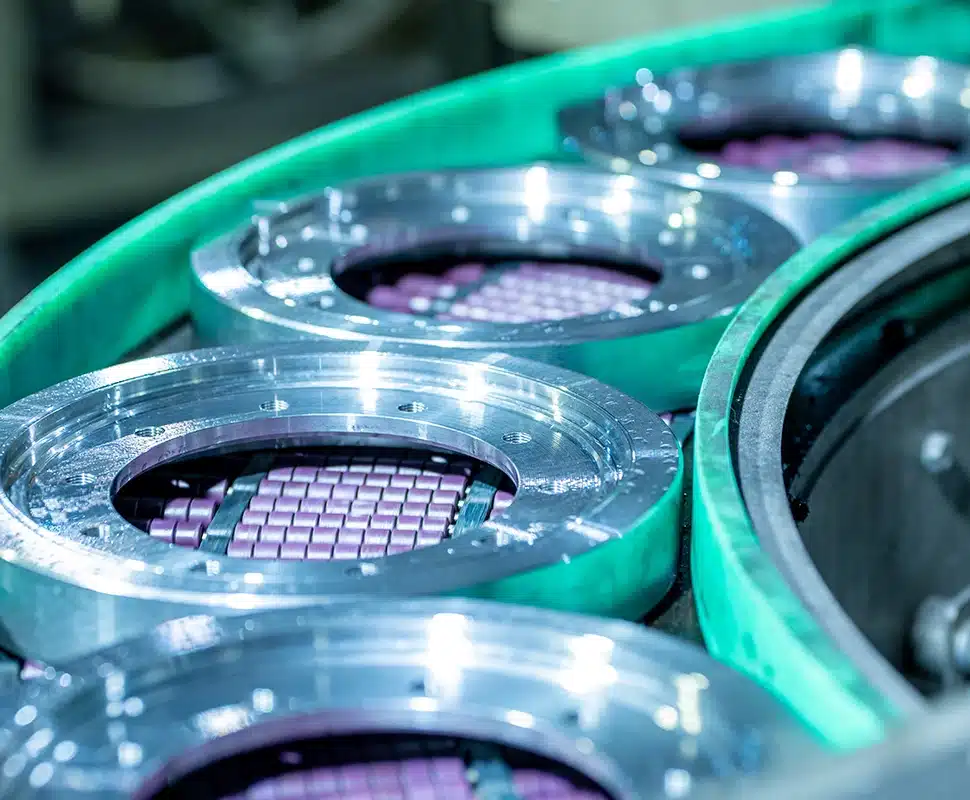
WHY RING ROLLING?
Ring rolling produces one-piece rings without welding or multi-part assembly. Material continuity and circumferential grain flow promote the strength and fatigue performance of heavily loaded components. Compared with machining from a solid disc, bar or block, the process shapes the material directly around the annular geometry and limits the volume to be removed. Proximity to the final shape thus reduces material waste and machining operations. Progressive deformation also allows rings of varied dimensions and profiles to be produced.
Let's explore together how ring rolling can benefit your project!
One-piece seamless rings
Ring rolling produces seamless rings with material continuity around their entire circumference. This design avoids the assembly interfaces, weld seams and heat-affected zones associated with multi-part solutions.
The component's behavior is thus more uniform under mechanical and cyclic loads. Combined with a suitable grade and surface protection, the absence of welds also improves reliability in demanding environments.
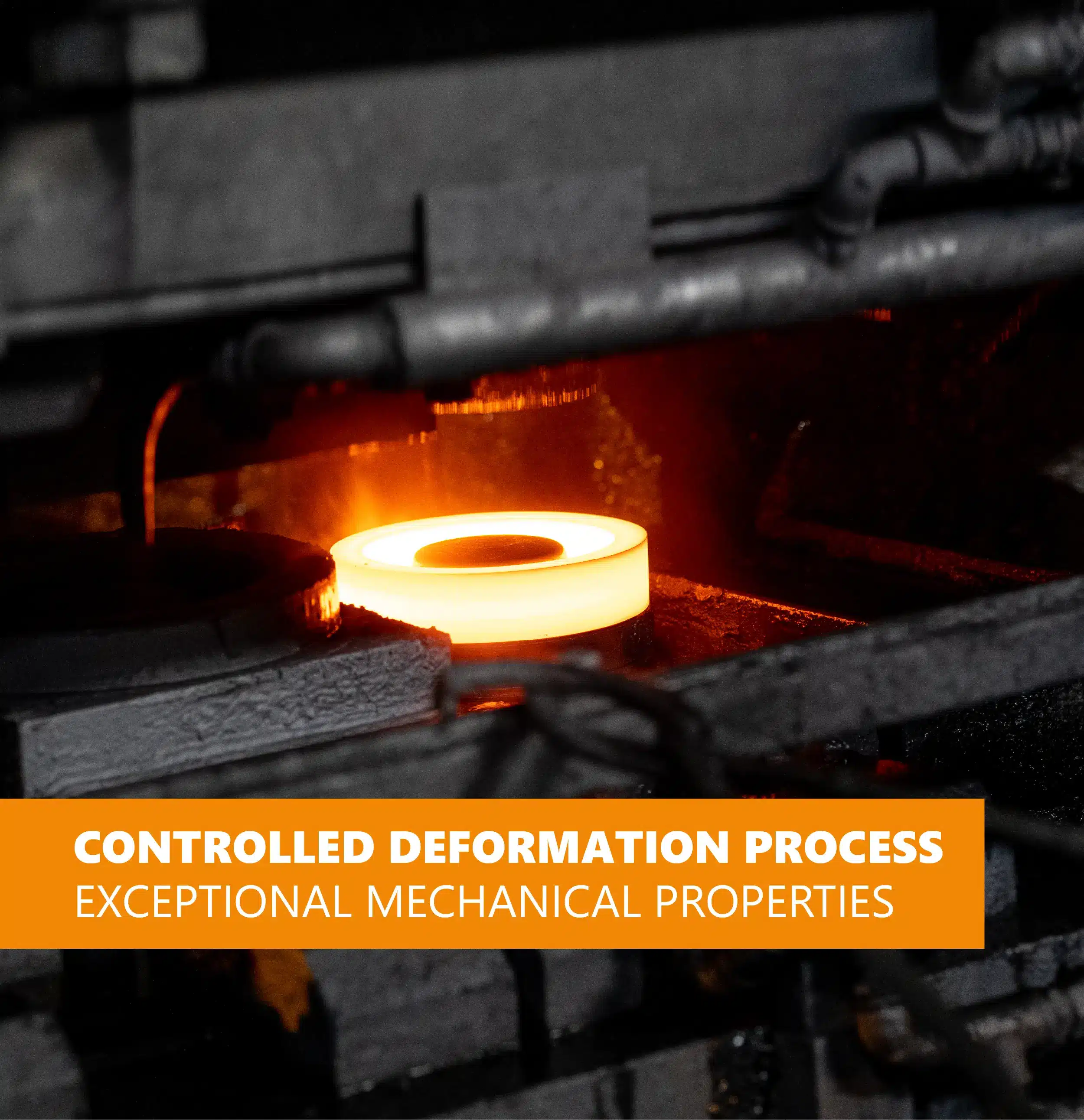
High mechanical properties
Hot deformation develops a circumferential grain flow that naturally follows the ring's geometry. It also helps homogenize and refine the microstructure, promoting strength, ductility, toughness and fatigue performance.
Working an already-solidified material limits the effects of certain porosities or shrinkage cavities associated with cast parts. Selecting the grade, rolling cycle and heat treatment then tailors the mechanical properties and temperature behavior to the application's requirements. The potential of circumferential grain flow to improve fatigue and toughness is notably documented by the Forging Industry Association.
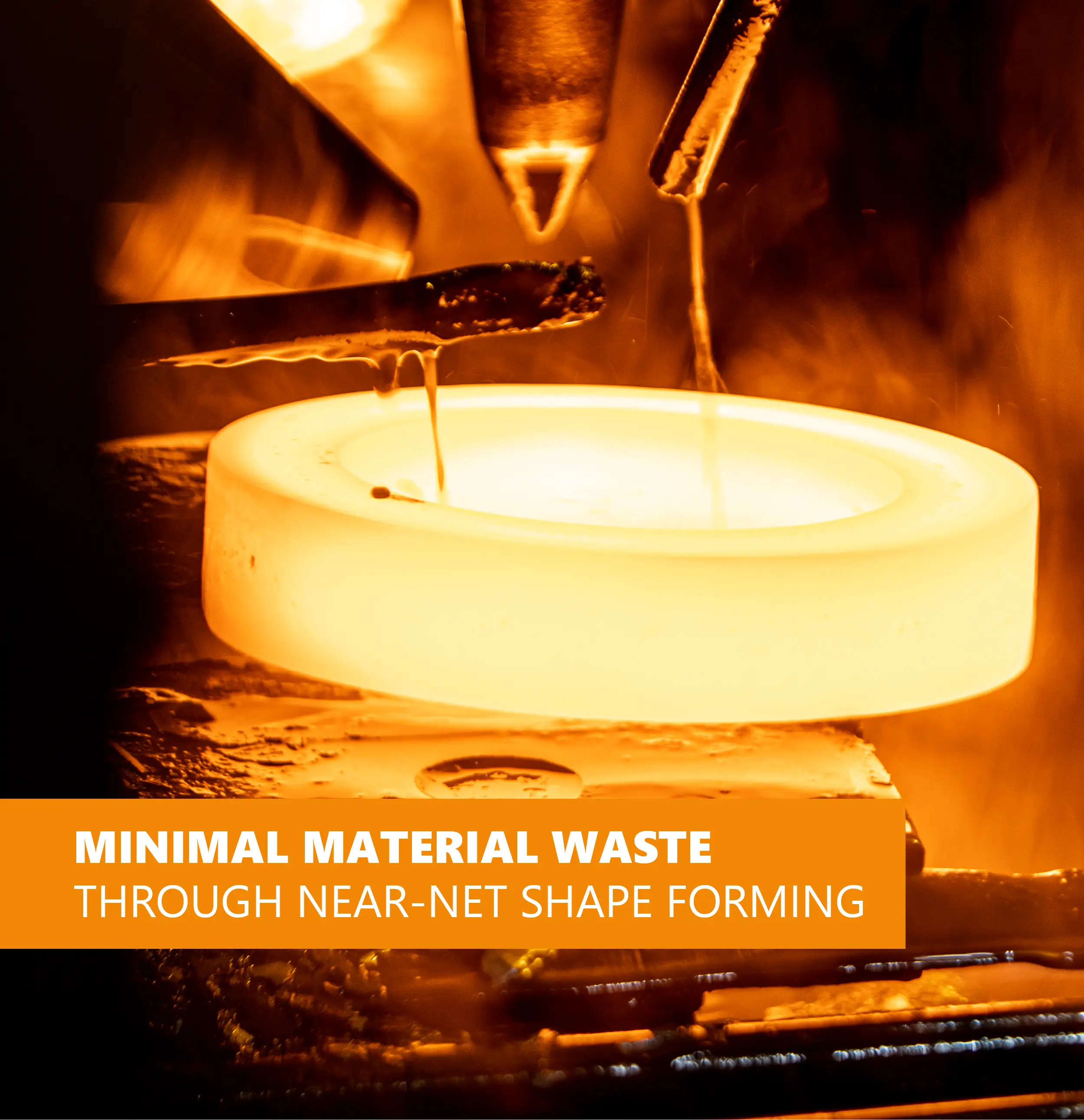
Optimized material usage
Ring rolling forms an annular geometry directly from a pierced blank. It thus avoids the extensive material removal that machining a ring from a solid disc or block would require.
The rolled shape's proximity to the final geometry reduces machining allowances, chip volumes and machining times. This efficiency represents a significant economic advantage, particularly for large series or high-value materials. ASM also identifies reduced material input among the main benefits of seamless rolled rings.
High geometric flexibility
The process adapts to a wide range of diameters, heights and wall thicknesses. Suitable tooling produces simple rectangular sections as well as more elaborate profiles with internal or external variations.
This flexibility allows the material distribution to be adjusted to the applied loads and the component's functions. It eases the production of rings for transmissions, bearings, turbines and many demanding industrial applications.
Ring Rolling at Setforge
Setforge Hot Formers specializes in ring rolling for the automotive and heavy-truck sectors. The site produces rings and driveline components of up to 250 mm in diameter in large series. Our expertise covers car and truck parts for combustion and hybrid drivetrains as well as new electrification-related applications. It notably supports the development of differential ring gears and components suited to electric drivetrains.
Ring rolling is complemented by in-house pre-machining and finish-machining capabilities. This organization keeps dimensions, functional interfaces and surface finishes under control, from the rolled blank to the ready-to-install component. Combining forging, rolling, machining and inspection meets the output, repeatability and traceability requirements of high-volume automotive and industrial production.
WOULD YOU LIKE TO KNOW MORE?
LET’S TALK ABOUT IT!
OUR FORGING PROCESS
Setforge forges parts from 0.1 kg to 1,500 kg across the full range of closed-die forging processes. A breadth of capability that is, quite simply, unique in the market. From prototype to high-volume automotive production, our approach goes well beyond the forge itself: we work alongside our customers from the earliest stages of co-development through to finishing operations, covering every step of the journey from design intent to finished part.
Deep dive into the geometries we forge !
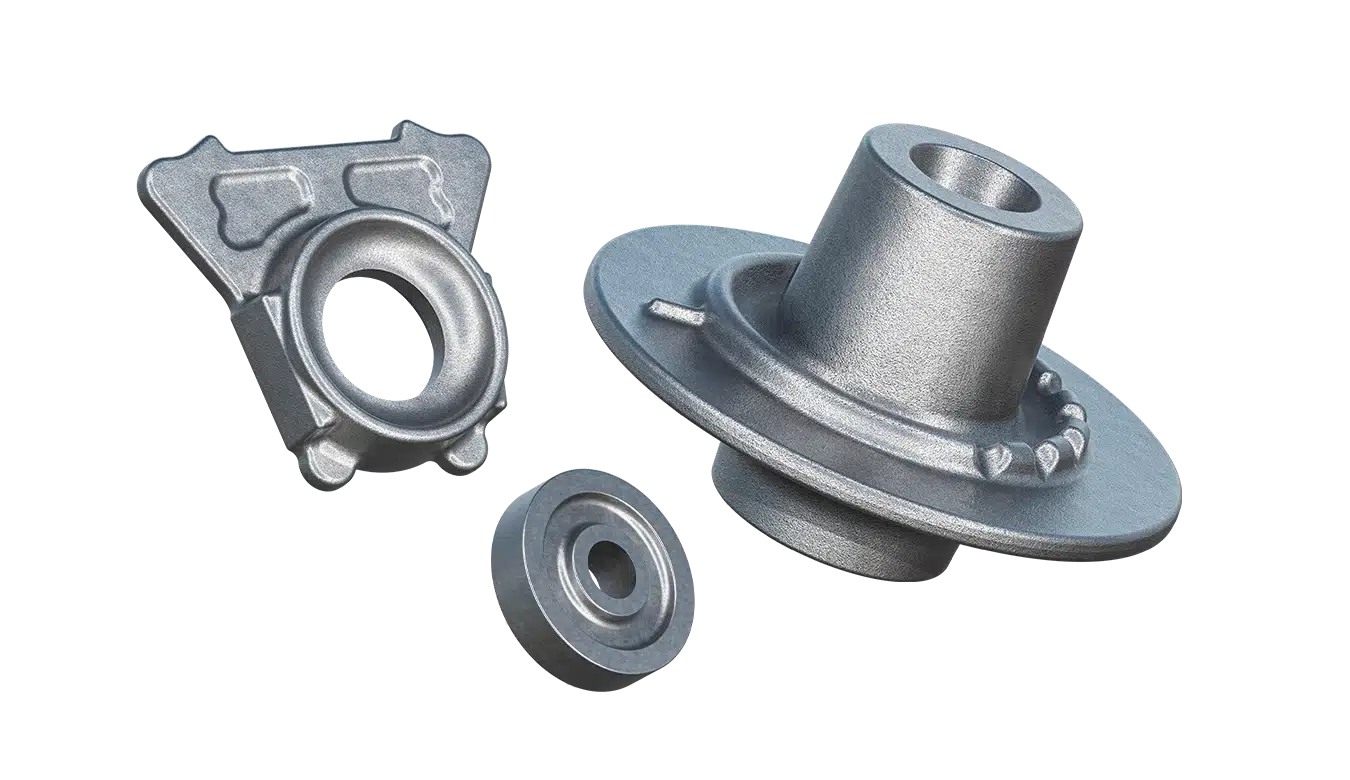
HOT FORGING
From 0.2 kg to 1,500 kg
Suitable for a wide range of complex shapes. Max weight: Steel 1,500 kg | Stainless Steel 1,400 kg | Ti and Ni-based 200 kg.
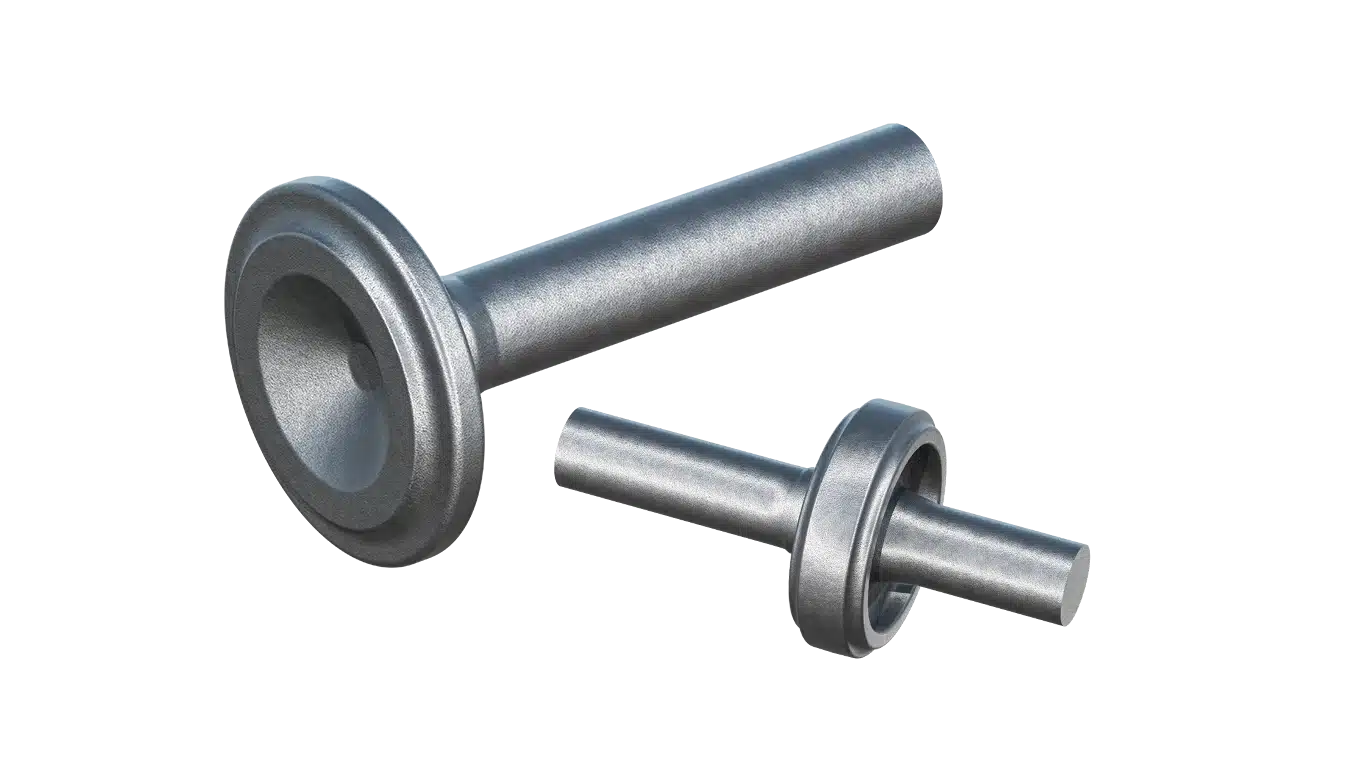
ELECTRICAL UPSETTING
From 0.1 kg to 200 kg
Long parts with flange up to 1,200 mm length, flanged diameter up to 450 mm and initial bar diameter up to 130 mm.
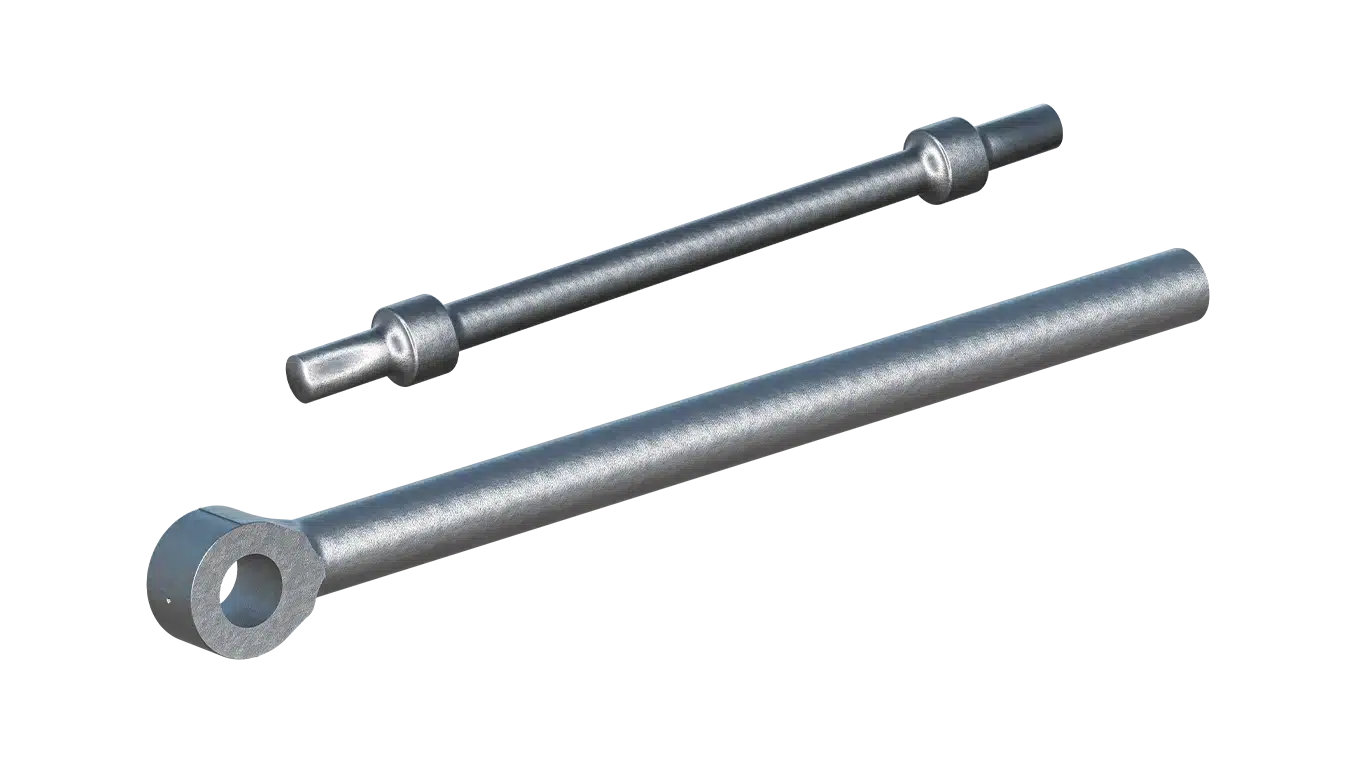
UPSET FORGING
From 2 kg to 600 kg
Long parts with complex head geometry up to 5,000 mm length, head diameter up to 400 mm and initial bar diameter up to 170 mm.
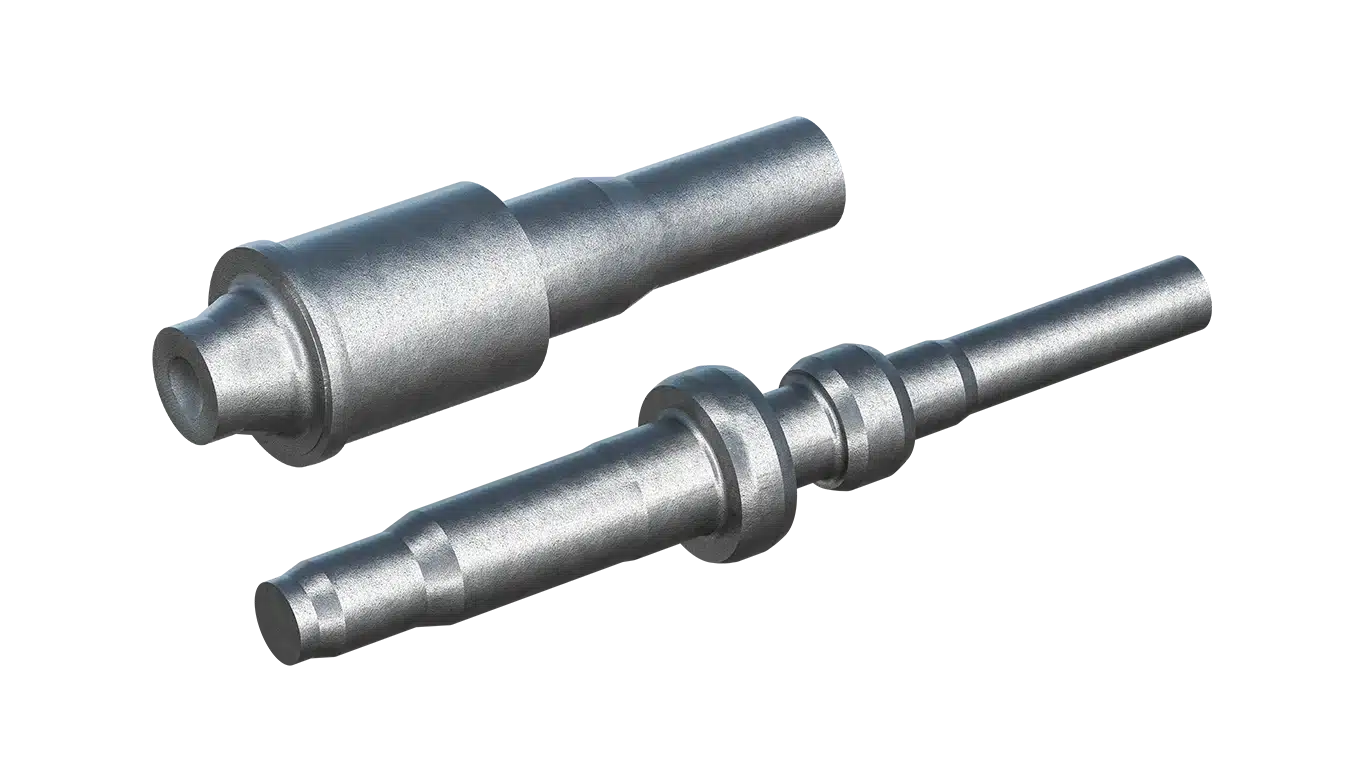
COLD FORGING
From 0.3 kg to 25 kg
Various shafts or long parts with max diameter up to 120 mm and 800 mm length.
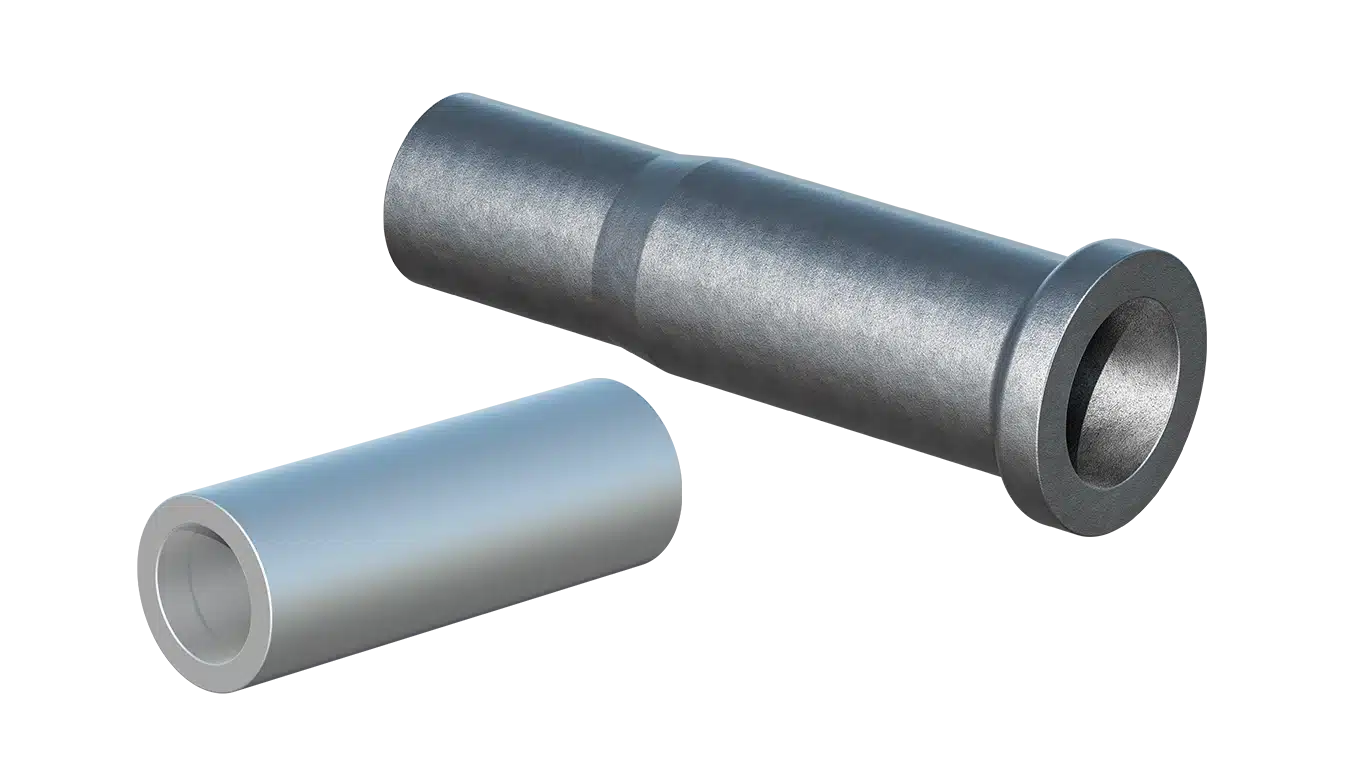
HOT EXTRUSION
Up to 1,500 kg
Tubular and shaft profile, straight or shaped, with or without hot piercing with O/D max 500 mm and length max 1,700 mm.
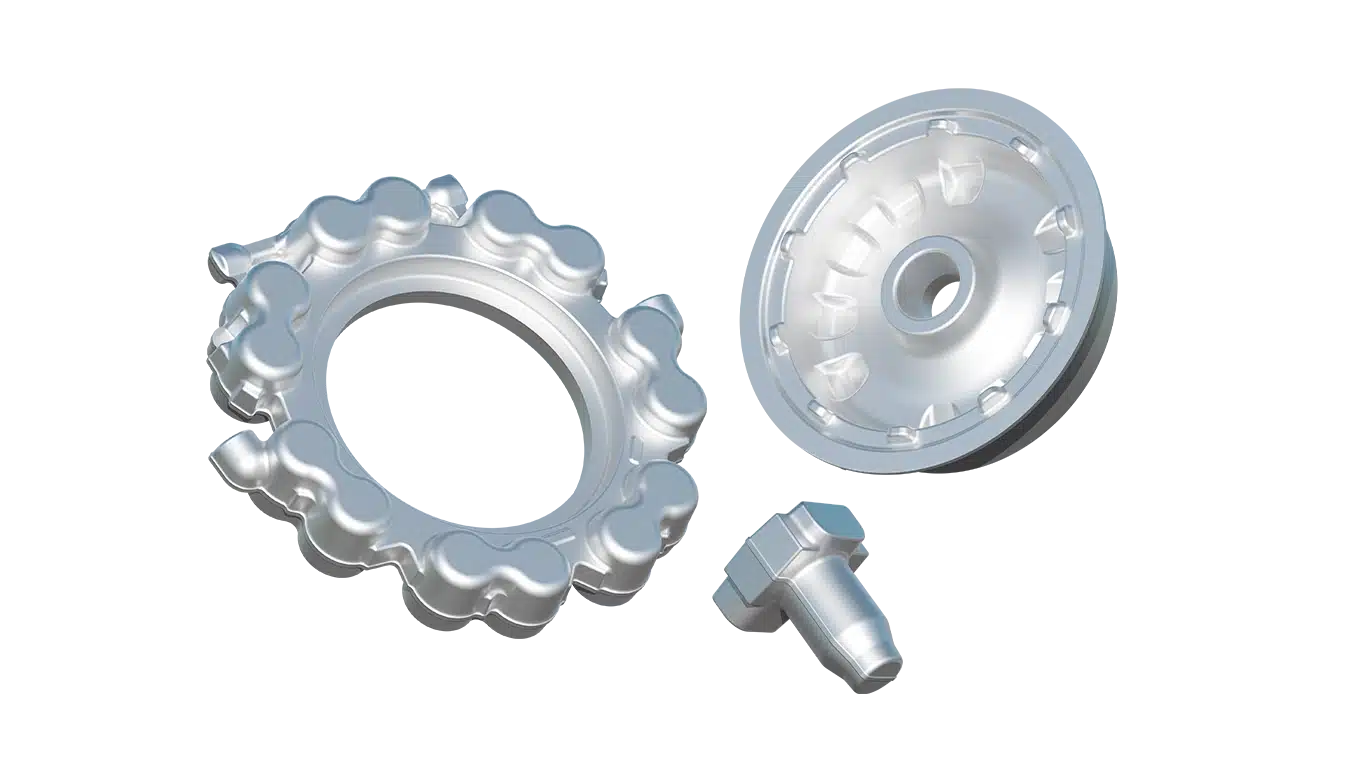
ALUMINUM FORGING
From 0.1 kg to 200 kg
Suitable for a wide range of complex shapes from the 1XXX to the 7XXX series depending on shape geometry.
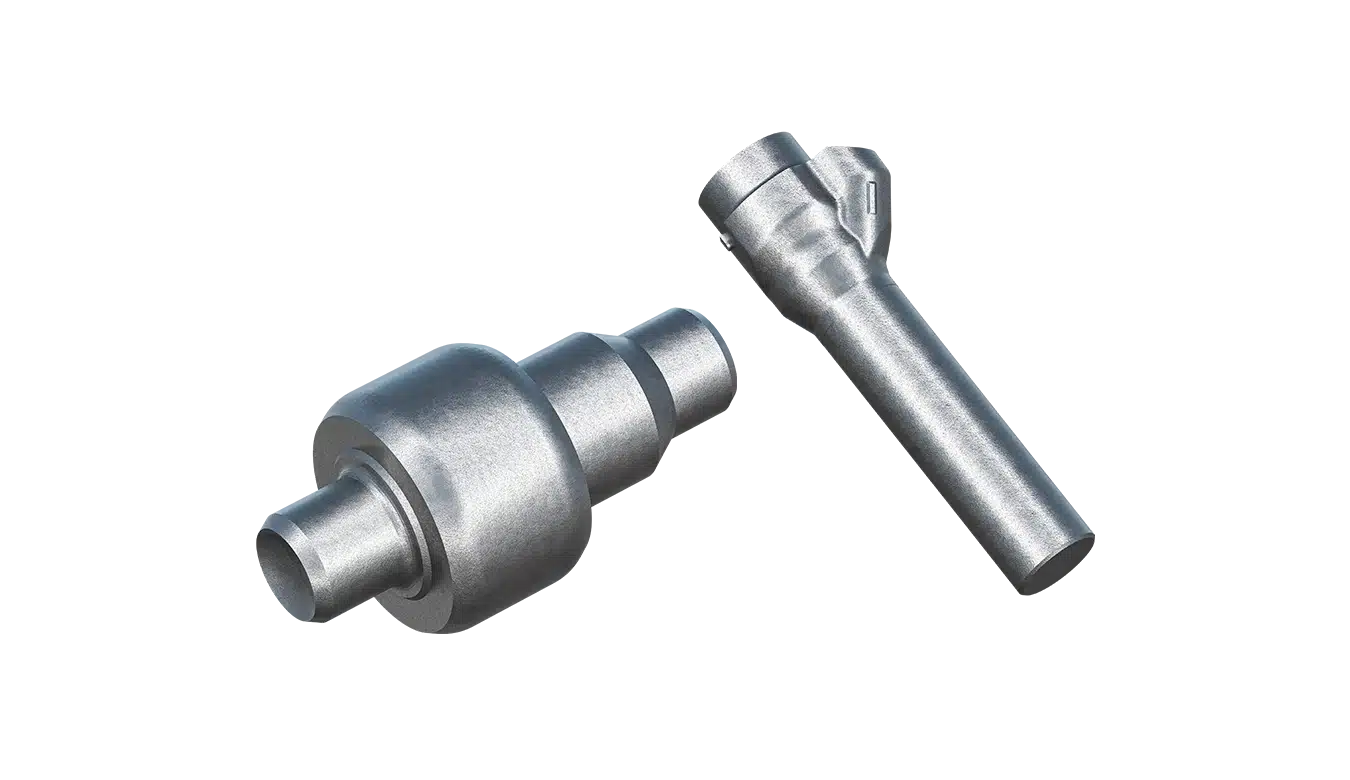
WARM FORGING
Up to 4 kg
Various parts with diameter up to 130 mm and length up to 450 mm.
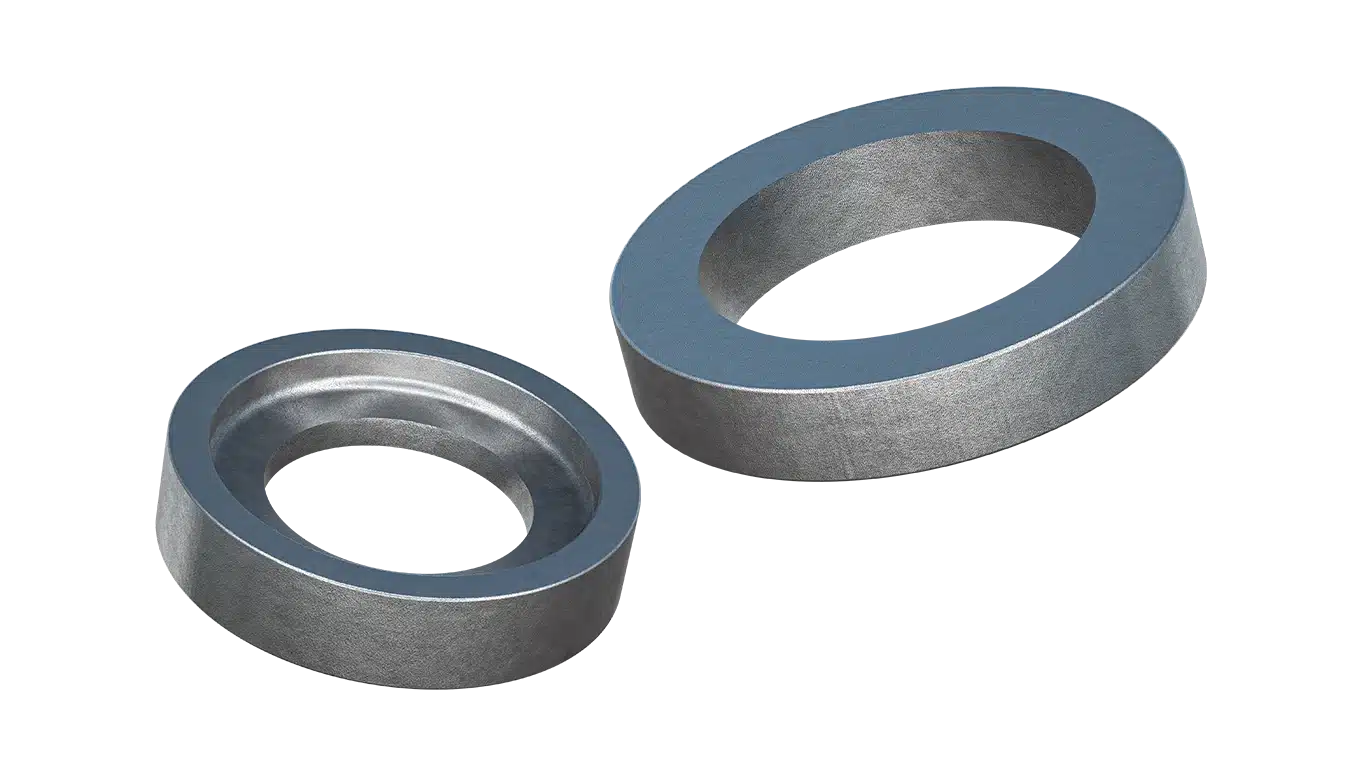
RING ROLLING
Up to 12 kg
Rings and crowns with various cross section geometries up to 250 mm diameter.
A 360° APPROACH
Over the years, we have developed genuine expertise across every discipline that a forged component requires: from early-stage engineering and tooling design to heat treatment and machining operations. Each of these capabilities has been built up through real industrial experience, working closely with OEMs, international Tier 1 suppliers, and machining partners. The result is a partner who understands the full chain, anticipates the constraints at each step, and stays involved from the first technical discussion to the final delivery.
Explore the full range of our capabilities !
On our Blog
Cold forging vs. Hot forging: which process fits your part?
31/07/2026
Forging is a manufacturing process, which shapes a solid-phase metal workpiece by applying compressive forces on it.
Read More
Developing a quality warm forging process
10/03/2026
Thanks to the automotive industry and its continuous development towards better, lighter and more cost efficient components, warm forging has gained greater importance. Alone or as a part of specia...
Read More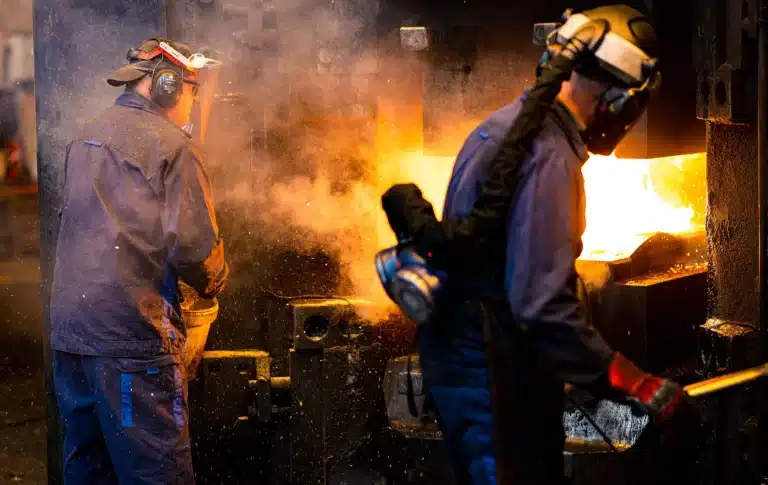
The undoubted advantages of the process
10/03/2026
Forging is classified in hot, warm and cold, according to the temperature at which is performed.
Read More