
A unique diversity of know-how
Hot Forging
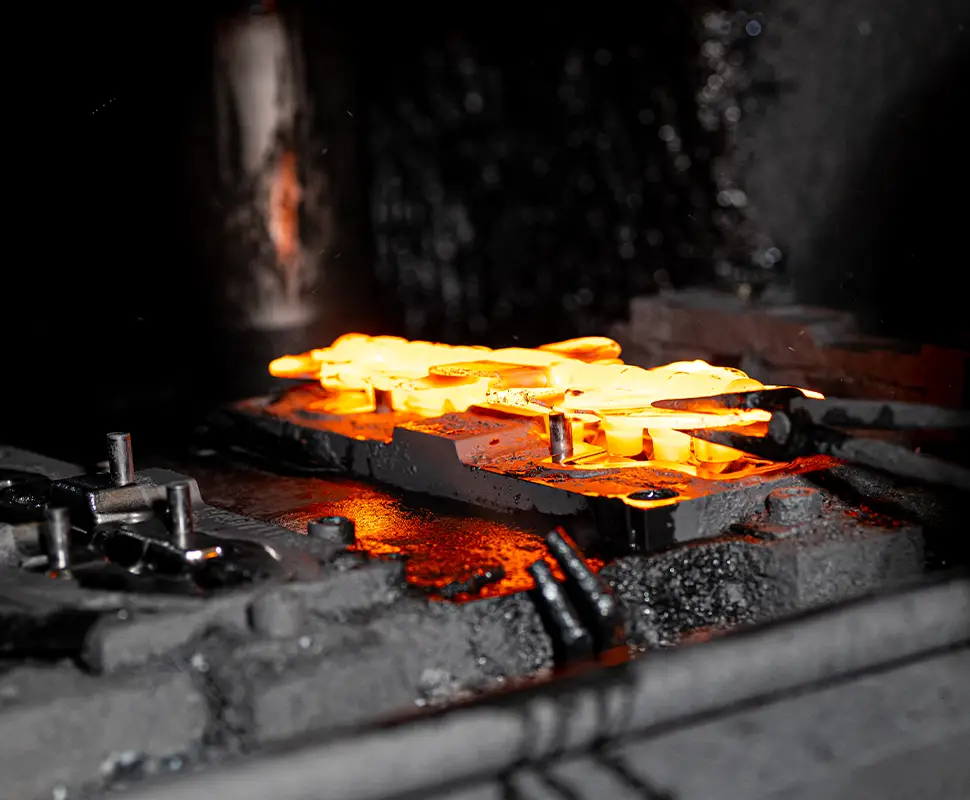
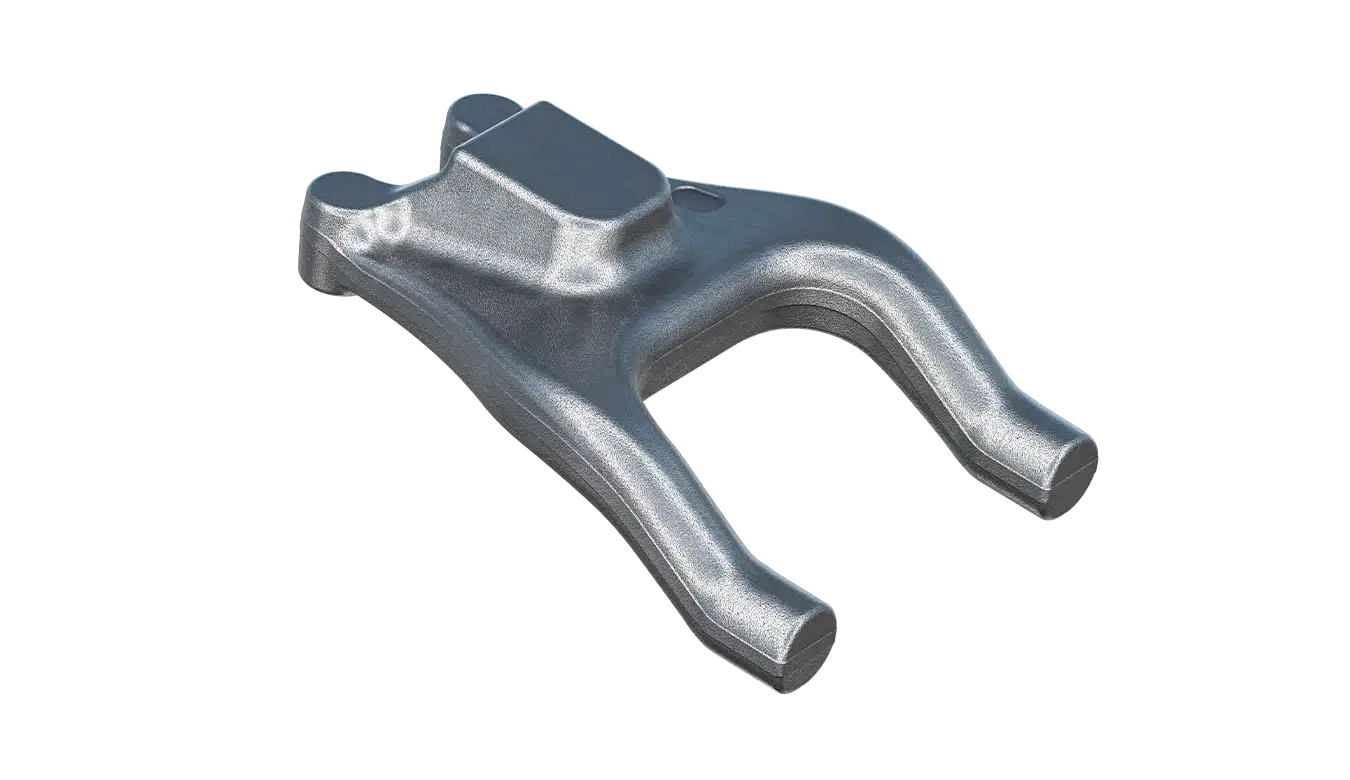
Hot forging is one of the most fundamental and versatile metal forming processes. It transforms raw material into high-performance bulk components through deformation at elevated temperature, using tooling matched to the target geometry. It differs from sheet-metal forming processes such as stamping, where material thickness remains largely unchanged. The process produces parts close to their final shape, with high integrity and grain flow oriented along the component’s contours. Control of material flow, temperature, and the successive forming steps helps develop the required mechanical properties while limiting machining to functional surfaces only.
Our hot forging capabilities cover precision components from 0.1 kg to parts weighing up to 1,500 kg. They draw on a wide range of equipment: drop hammers, counterblow hammers, mechanical presses, hydraulic presses, and screw presses. This diversity allows us to work with the main families of forgeable materials for the aerospace, automotive, energy, industrial, and defense sectors, where mechanical strength, reliability, and fatigue resistance are critical requirements.
Closed die Forging
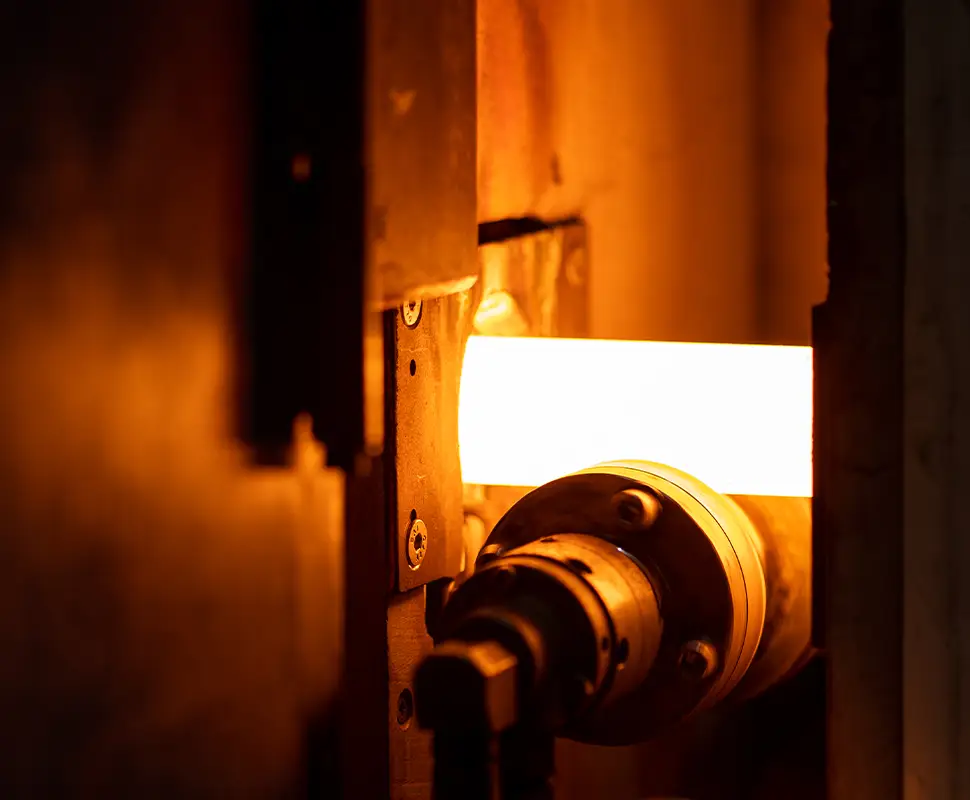
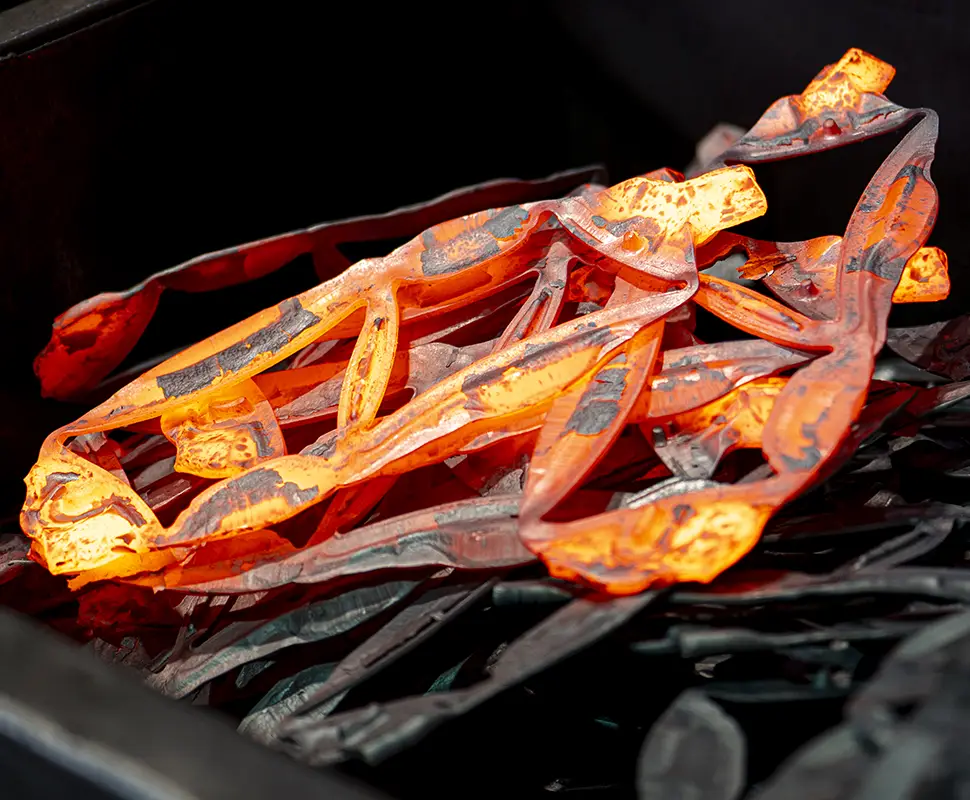
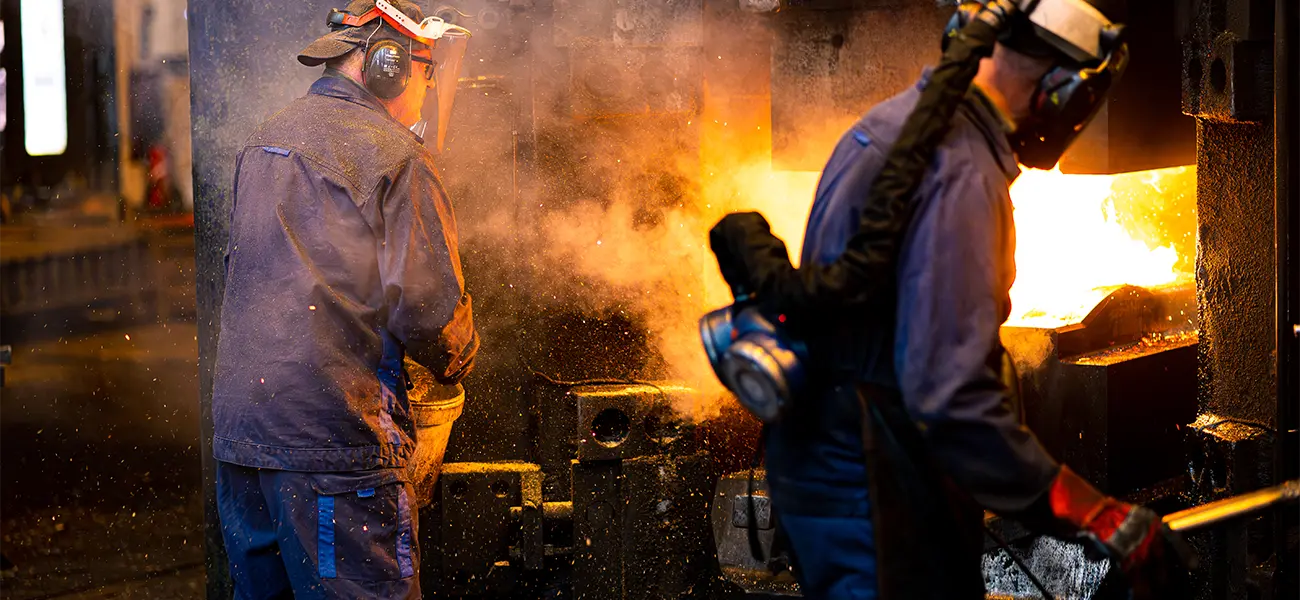
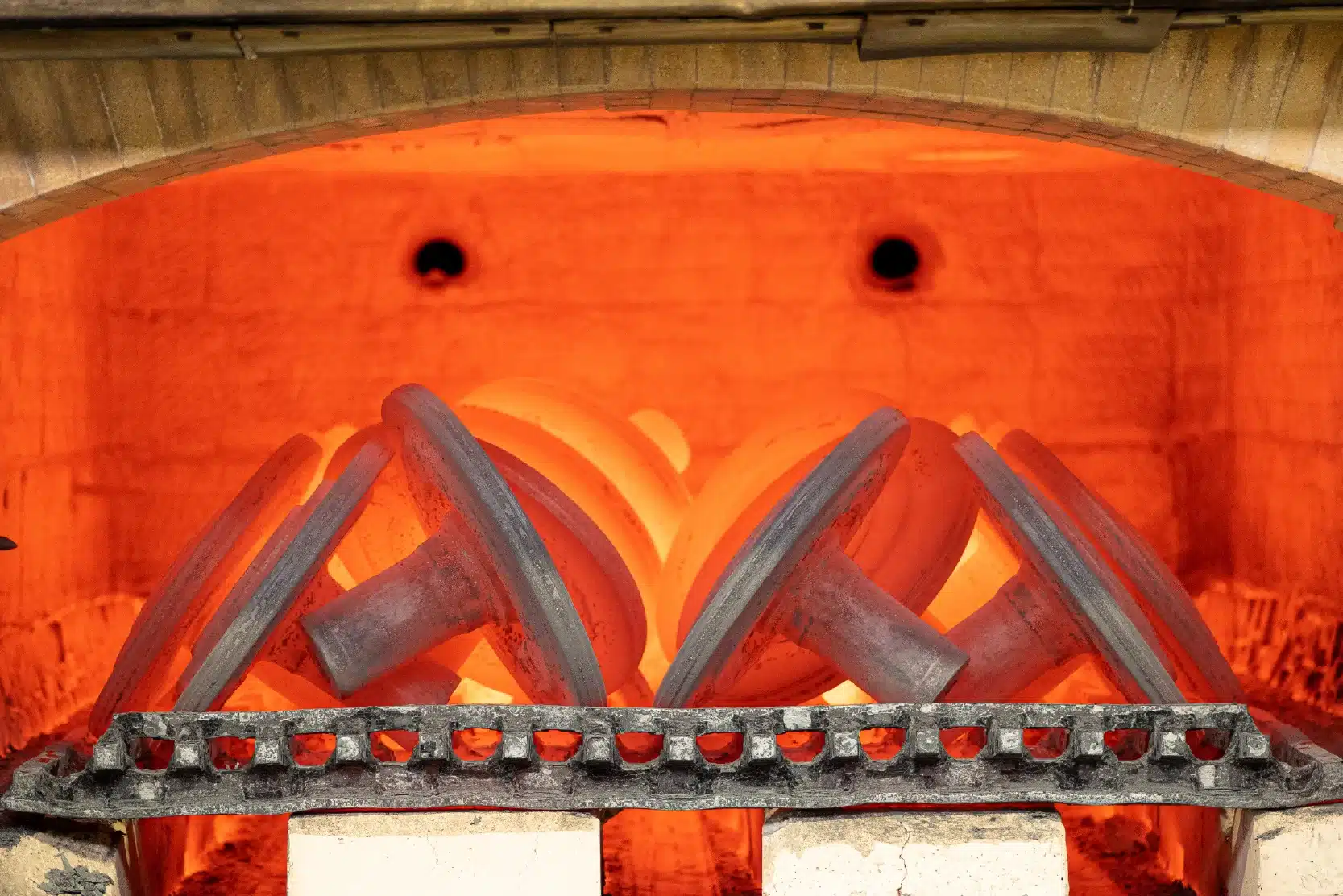
Hot forging brings the metal to a temperature that allows significant deformation with controlled forces. Recovery and recrystallization phenomena accompany the forming process, promoting the development of a microstructure suited to the target properties. The heated billet is placed between two dies. Under the action of a hammer or press, the material flows into the die cavities until they are filled. The excess forms flash, whose resistance to flow helps fill the most intricate areas.
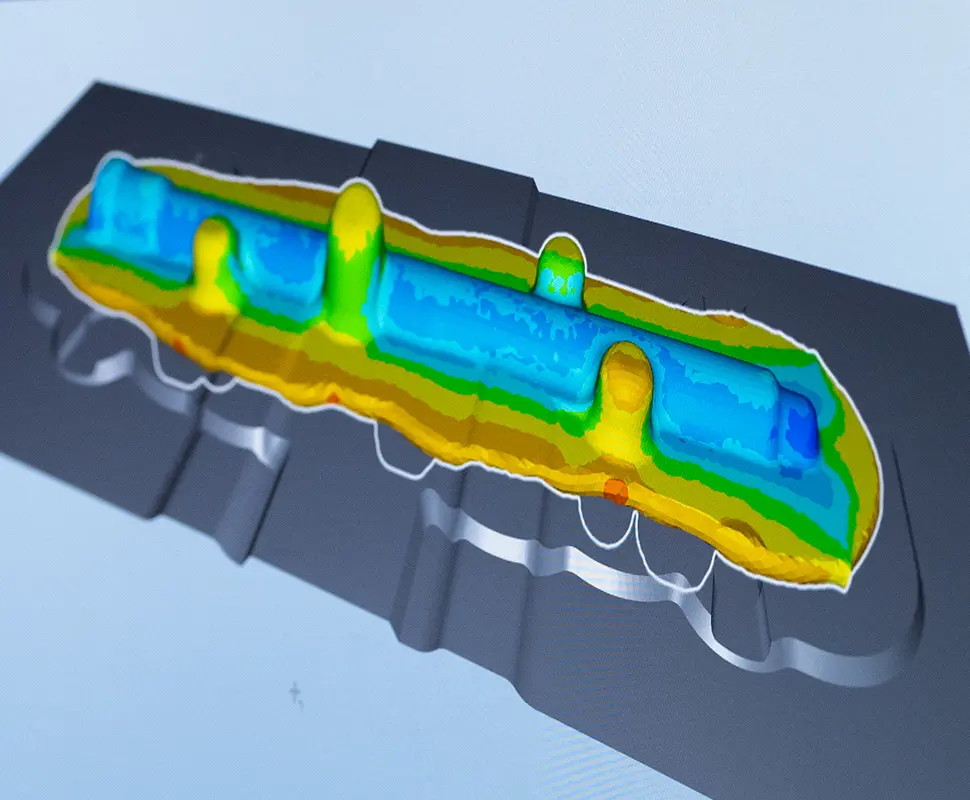
One or more operations progressively distribute the material, orient the grain flow, and bring the part closer to its final geometry. Depending on the application, this control can improve certain mechanical properties by 15 to 30% compared with equivalent parts machined from bar. Numerical simulation optimizes preforms and forces while anticipating the risks of underfill, laps, or unsuitable grain flow before production.
Setforge capabilities
Small, medium and high production volume
Steel, Alloy Steel
From 0.2 kg up to 1500 kg
Stainless Steel, Duplex
From 0.2 kg up to 1400 kg
Titanium Alloy
From 0.2 kg up to 200 kg
Ni-Based Alloy
From 0.2 kg up to 200 kg
Manufacturing Process
Hot forging can be applied to many families of metals, including carbon and alloy steels, stainless steels, aluminum alloys, titanium alloys, nickel-based superalloys, copper alloys, and various special materials. Each material has its own forgeability window and thermomechanical behavior. Temperatures, strain rates, transfer times, and cooling conditions are therefore adapted to the alloy, geometry, and target properties.
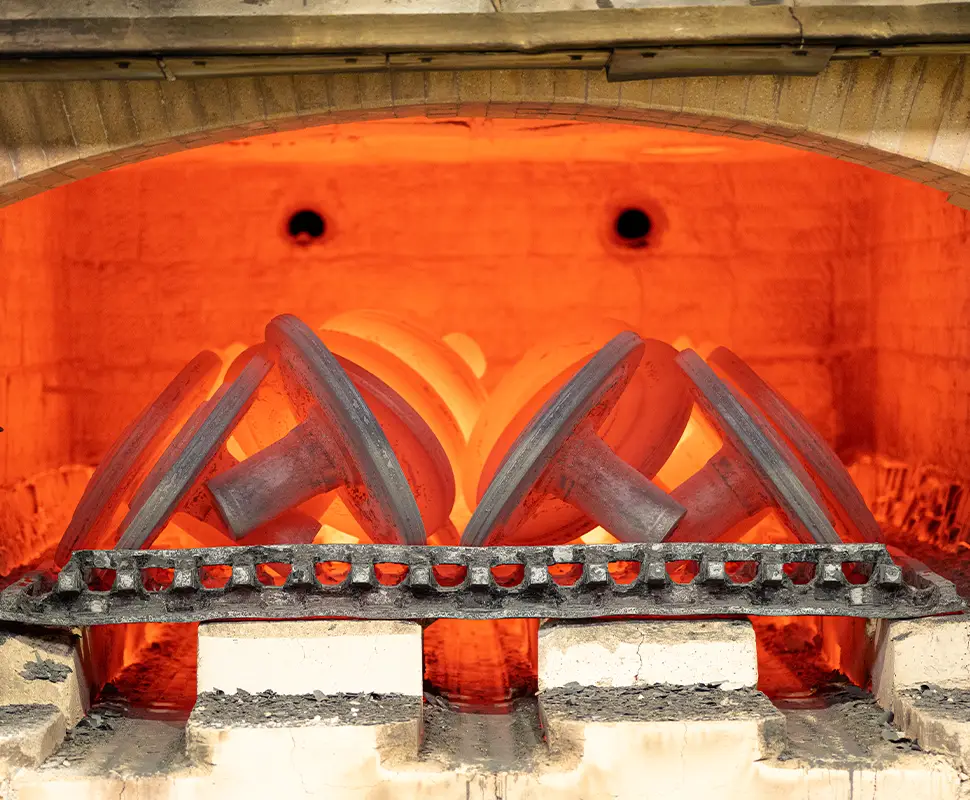
Steels are generally forged within a range of approximately 950 °C to 1,200 °C. Aluminum alloys are formed at lower temperatures, often around 400 to 500 °C. Titanium and nickel-based superalloys, meanwhile, require particularly precise control of their thermal window. Adapting these parameters helps facilitate material flow, preserve metallurgical quality, and develop a microstructure suited to the component’s final function.
Tools of excellence
Our diverse equipment portfolio enables optimal process selection based on component geometry, material characteristics, and production requirements. Each technology offers distinct advantages for specific forging applications.
Drop Hammers
Impact-Driven Metal Forming
How it works?
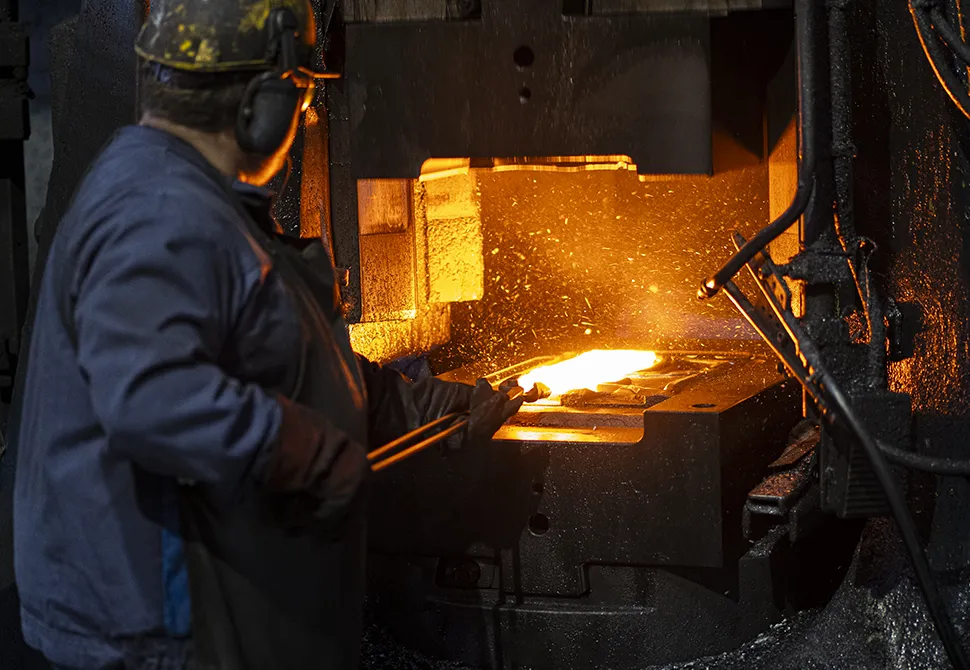
The moving ram carrying the upper die is raised hydraulically or pneumatically, then either freely dropped (single-acting) or driven downward (double-acting) toward the part positioned on the anvil. Successive blows progressively deform the heated metal until the die cavity is filled, with each impact delivering the energy required for forming.
Initial investment and tooling expenses are significantly less than press forging systems.
Quick changeover capability and straightforward tool design.
Can handle various part sizes and geometries with relatively simple die changes between production runs.
The rapid impact action works well for components requiring thin sections or complex airfoil shapes.
Hydraulic Presses
Controlled-Pressure Metal Forming
How it works?
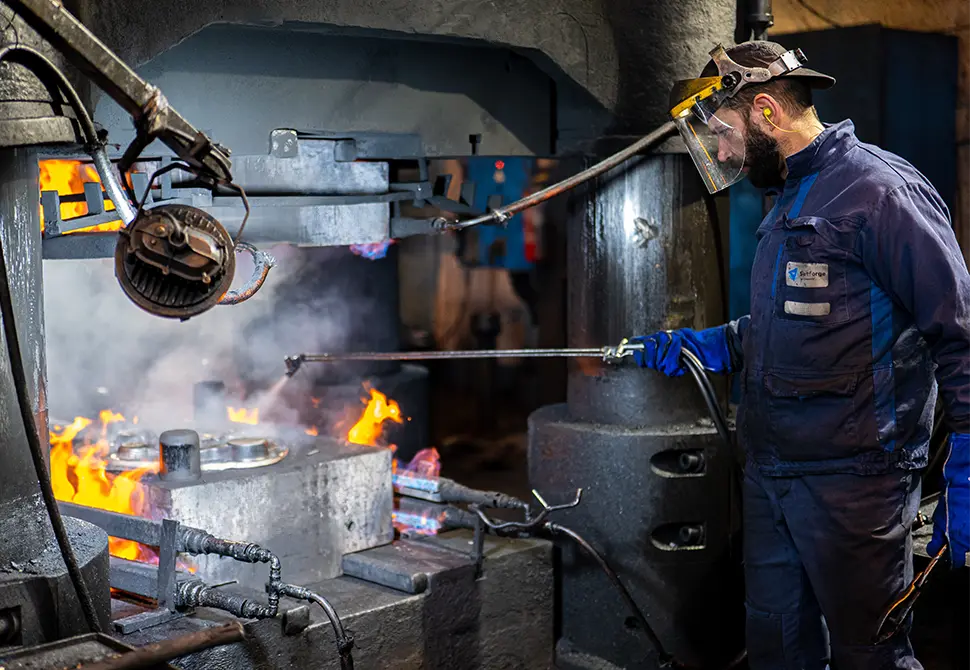
A hydraulic circuit drives the piston or pistons and applies a continuous force to the part, adjustable throughout the entire stroke. Control of the press kinematics helps manage strain rates throughout the component volume and enables the processing of metallurgically demanding materials. These presses are particularly well suited to aluminum forging.
Force is available over almost the entire stroke.
Able to handle parts of any size, from the smallest to the heaviest.
The systematic use of ejectors helps reduce draft angles and enables more complex geometries.
The press can be easily automated for series production.
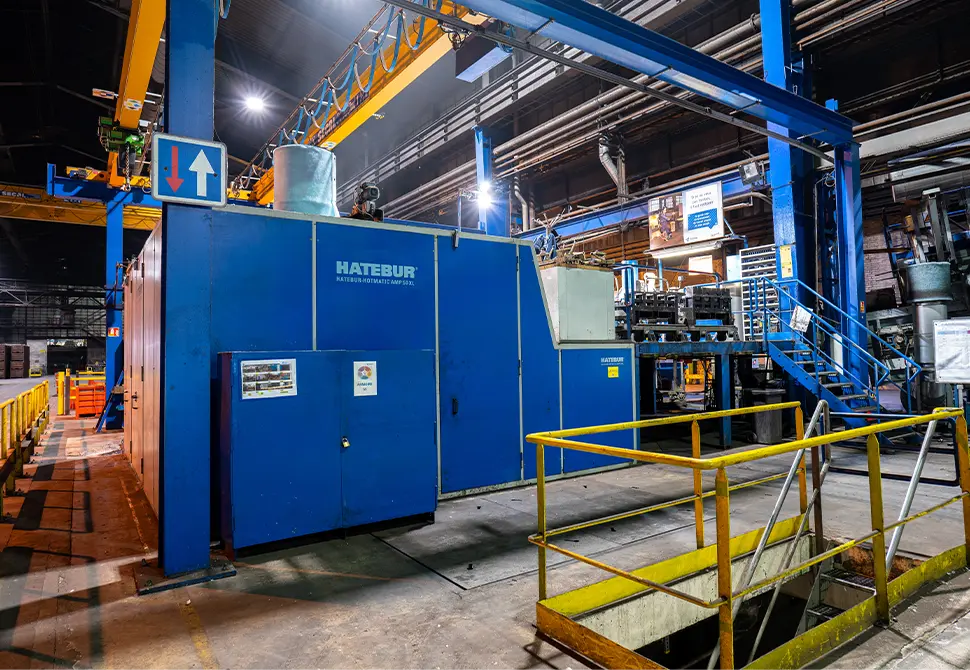
High-Speed Horizontal Presses
Automated high-throughput production from bar stock
How it works?
The ram moves horizontally and progressively forms the material across several stations. The billet, heated and cut to length in-line, progresses through successive die impressions, while the horizontal configuration facilitates automated transfer and enables the high production rates required for high-volume production.
Cycle rates from 35 to 150 strokes per minute enable high-volume manufacturing of mass-produced components.
Hot shearing and direct bar feeding improve material supply efficiency and reduce handling steps.
Progressive forming across up to 5 stations allows complex parts to be fully formed in a single heat.
The horizontal layout simplifies material feeding, transfer systems, and finished-part removal without any manual handling.
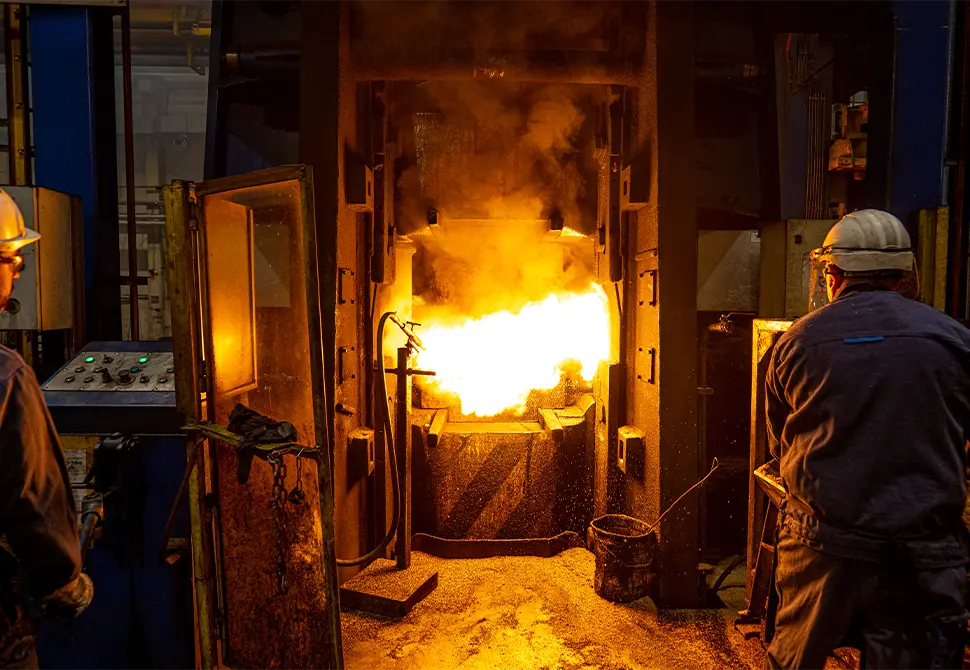
Counter-blow hammer
Dual-Ram Impact Forging Systems
How it works?
The upper and lower rams accelerate simultaneously toward each other and strike the part positioned between the two dies. Their opposing motion concentrates the energy on the forming process while reducing the forces transmitted to the foundations, making this configuration particularly suitable for large components.
The opposing-ram design cancels out much of the ground shock, reducing the need for foundation work.
The wide die space and long ram strokes allow particularly tall, wide, and oversized forgings to be processed efficiently.
Often combined with preparation equipment to accommodate a wide variety of parts.
The simple, robust drive system, located outside the vibration zone, ensures low downtime and minimal maintenance requirements.
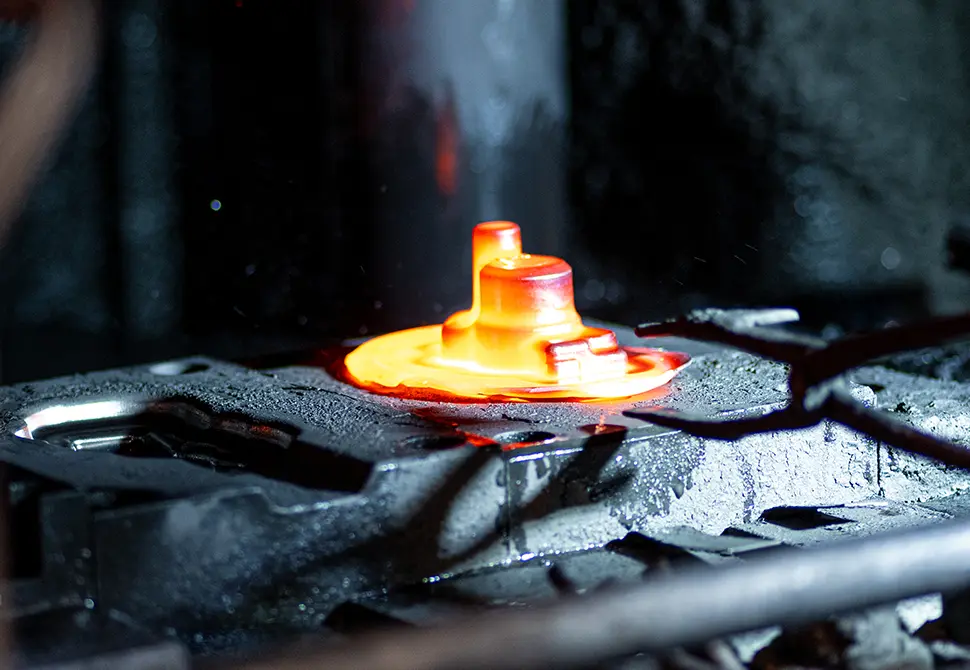
Vertical Mechanical Presses
Precision and repeatability
How it works?
A motor drives a flywheel connected to a crankshaft or eccentric mechanism, which converts rotation into vertical movement of the ram. The stroke is fixed, and maximum force is reached as the ram approaches bottom dead center, enabling fast, consistent cycles well suited to repetitive or automated production.
Automated operation can achieve up to 70 strokes per minute for high-volume production applications.
The fixed stroke length and precise ram positioning ensure repeatable part quality from one production run to the next.
Integrated ejection systems automatically remove parts, reducing labor requirements and significantly shortening cycle times.
Short tooling contact times and the absence of impact allow tooling hardness to be increased and significantly improve tool life.
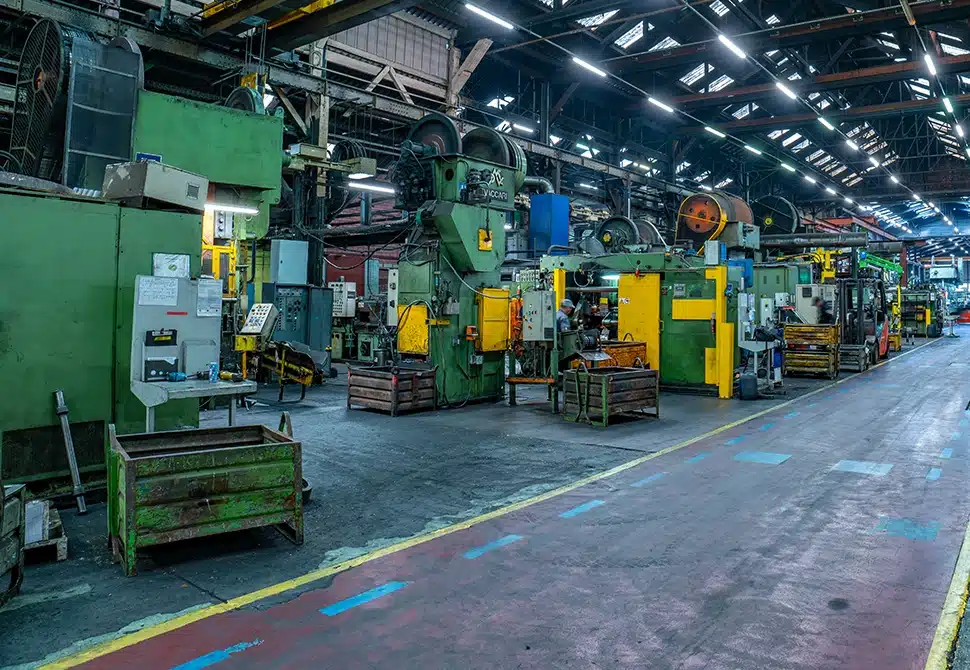
Screw Presses
Energy-efficient precision forging
How it works?
The rotational energy of a flywheel or a direct electric drive is transmitted to a vertical screw, which moves the ram toward the part. The energy is delivered during the blow, providing fine control over the forming process and good repeatability for complex geometries. It offers an ideal compromise between a forging hammer and a mechanical or hydraulic press.
Flywheel speed control allows precise adjustment of impact force from 10% to 100% of capacity.
The slower ram speed, around 0.5 m/s, ensures stable operation while limiting ground shock and noise.
Combines the energy efficiency of a forging hammer with the precision and control of a press system.
The press deforms the material through a defined energy input, like a forging hammer, while offering the advantages of a press: multiple die impressions and adjustable energy.
WHY HOT FORGING ?
Hot forging combines design freedom, metallurgical integrity, and mechanical performance. It can produce both precision parts and large components across a wide range of materials. Compared with full machining from solid stock, it distributes the material according to the component’s geometry and reduces the volume to be removed. Compared with welded solutions, it enables one-piece components to be produced. Unlike casting processes, forming rolled stock limits internal defects and promotes continuous grain flow. Investment in dies is progressively amortized through process repeatability. Hot forging is therefore a high-performance solution for critical parts, from one-off production to high-volume series.
Let’s explore together what hot forging can bring to your project!
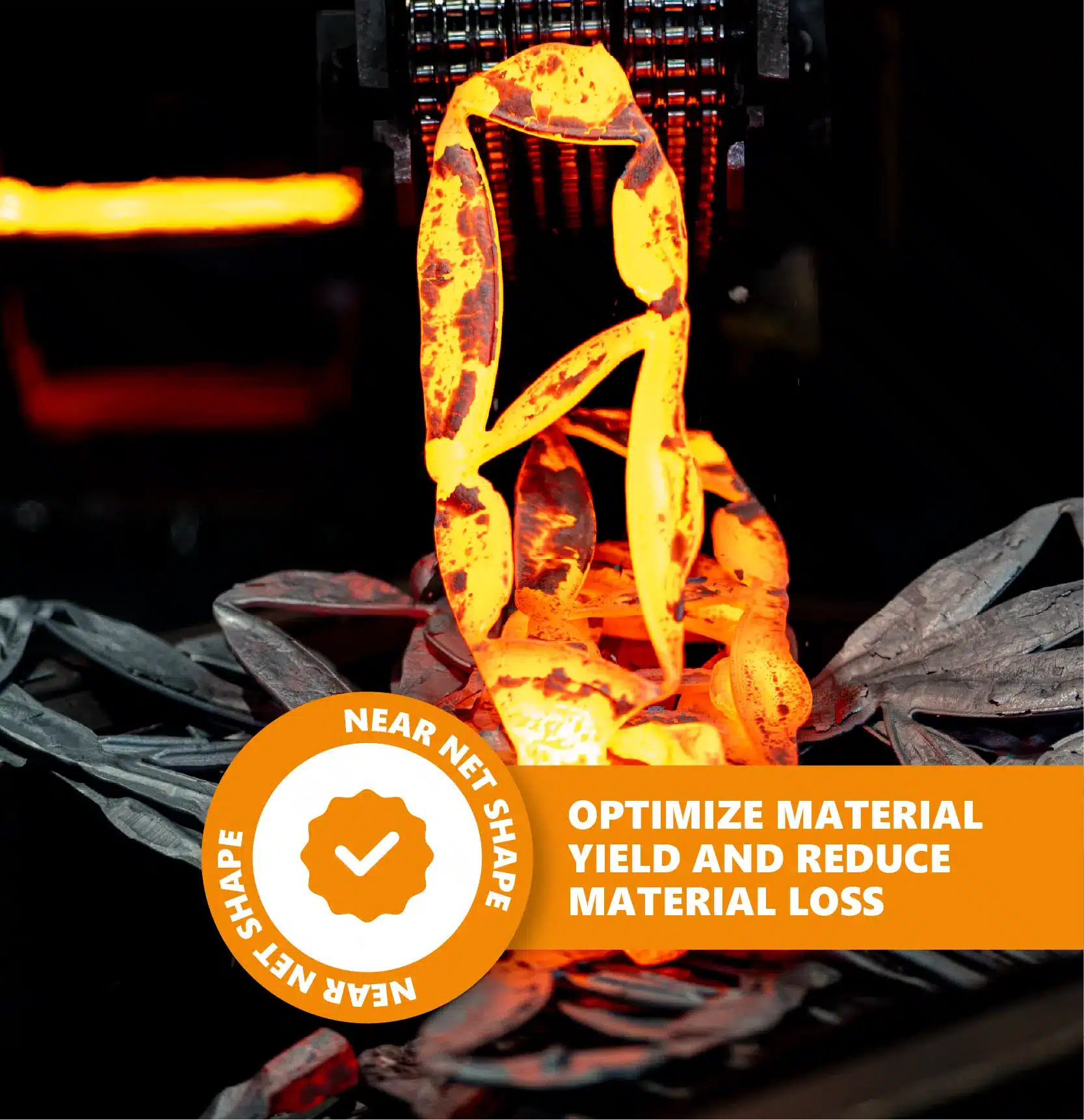
Optimized material usage
Near-net-shape forming reduces the volume of material to be removed compared with machining entirely from a bar or block. Preform and die design places the metal where it is actually needed. The main objective is to optimize material yield and reduce material loss. In some cases, flashless forging can achieve a 1:1 input-to-part weight ratio.
This optimization lowers raw-material costs, particularly for titanium, nickel alloys, and special steels. Flash and offcuts are sorted and recycled through the appropriate metallurgical streams, contributing to more efficient resource use and reduced production waste.
High mechanical properties
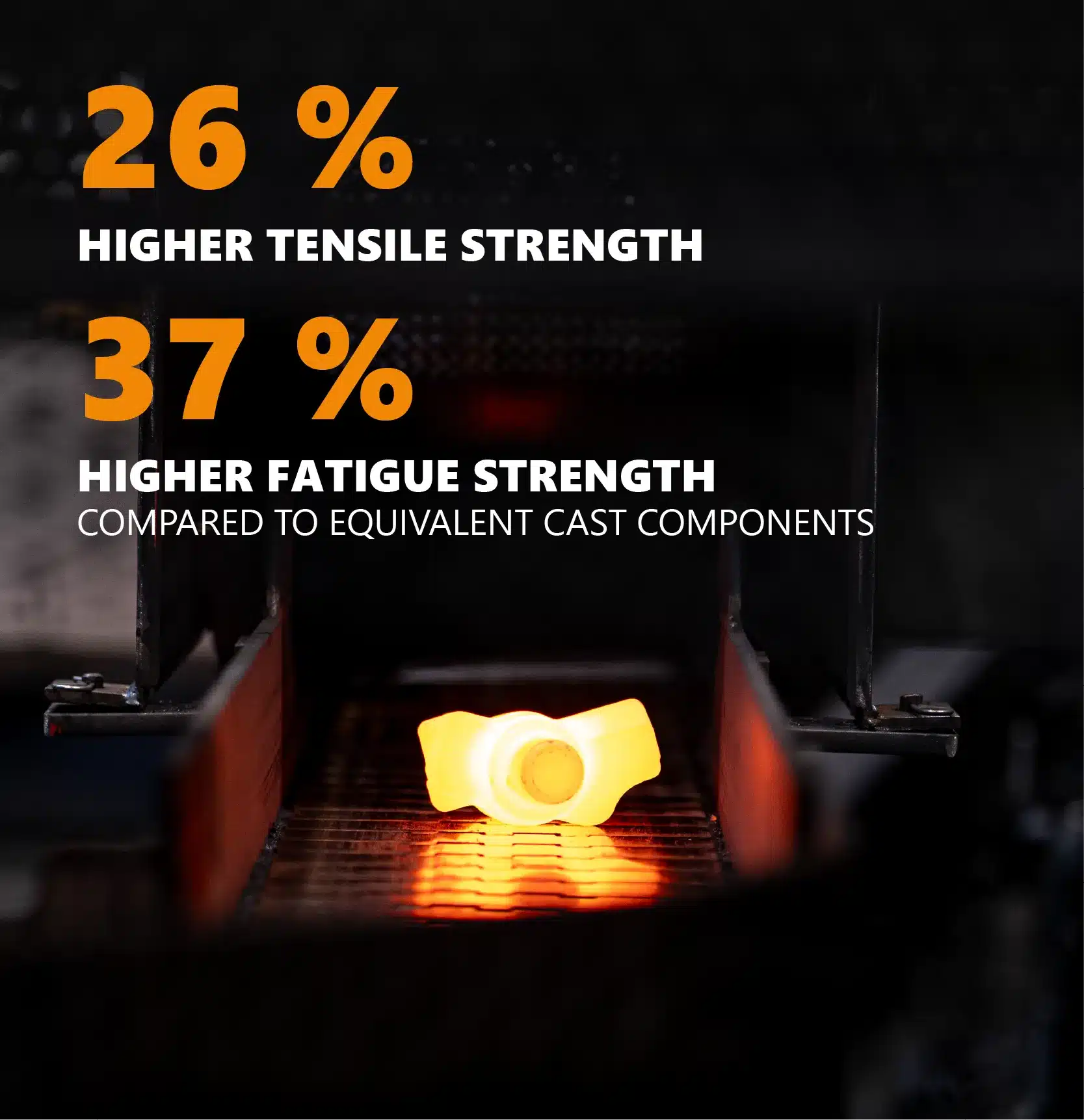
Hot deformation allows the grain flow to be oriented along the part’s contours and main mechanical loads. This material continuity promotes strength, toughness, impact resistance, and fatigue performance under high or repeated loads.
In a comparative study of crankshafts, forged steel showed 26% higher tensile strength and 37% higher fatigue strength than ductile cast iron. These results illustrate the potential of forging for highly stressed components, where reliability and service life are essential criteria.
A competitive production solution
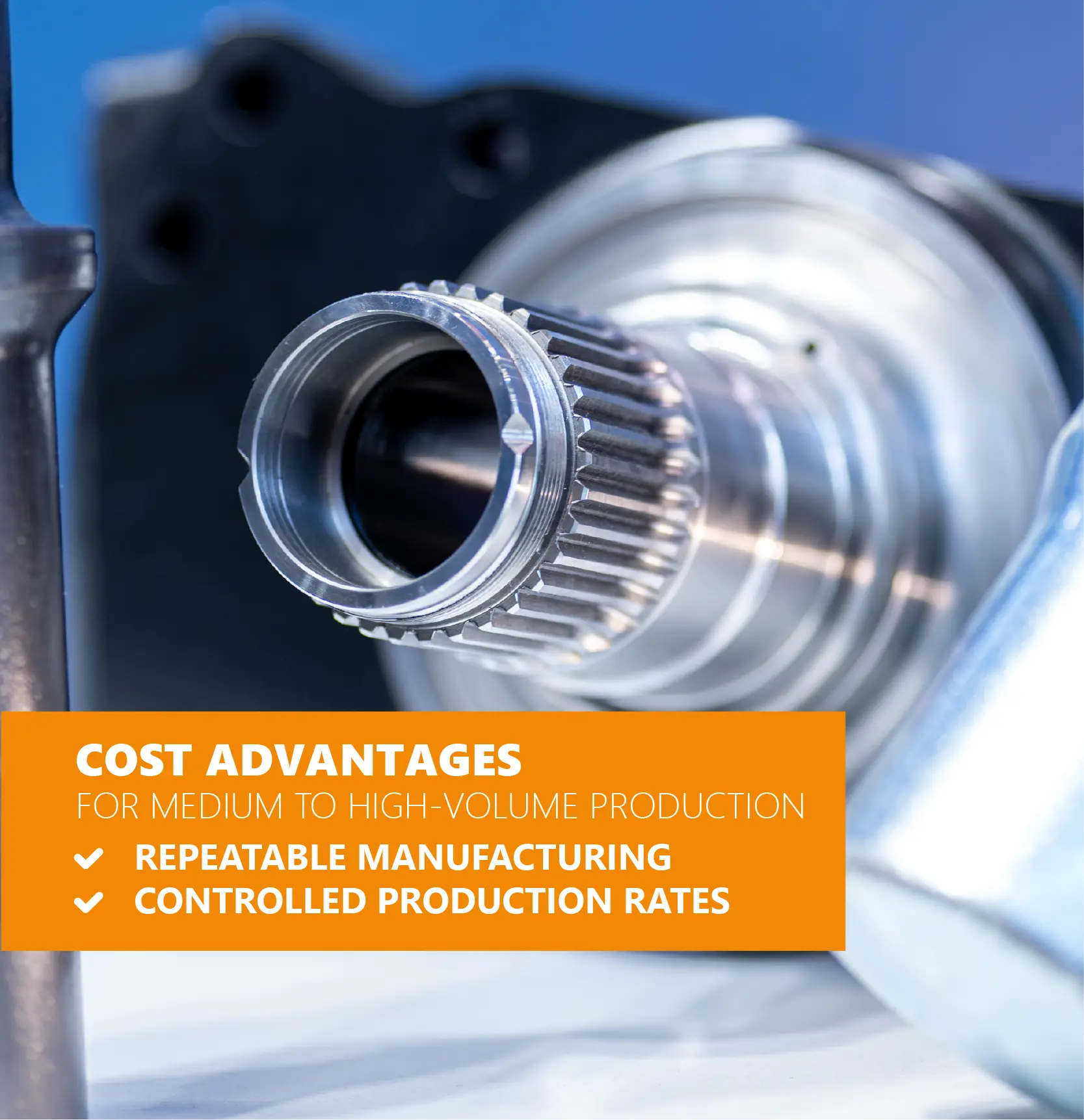
Hot forging requires the design and manufacture of dedicated dies, with the associated cost progressively spread across production volumes. The process therefore becomes particularly competitive for medium-, high-, and very high-volume production, thanks to repeatable manufacturing and controlled production rates.
Proximity to the final shape reduces machining allowances, machining time, and the number of secondary operations. Combined with process consistency and line automation, these reductions help control the overall cost of the component while maintaining its performance and quality.
Complex, functional geometries
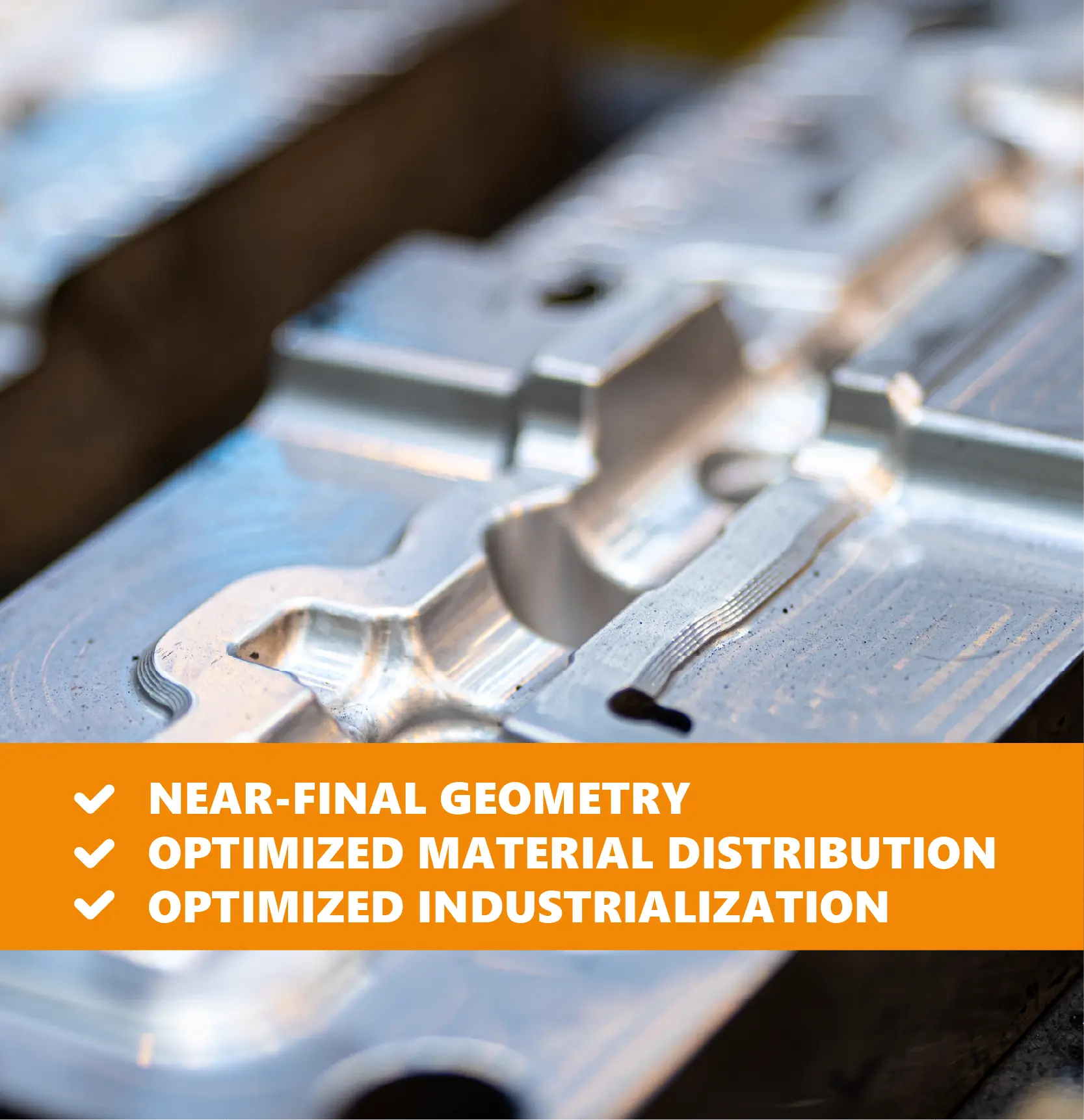
Die forging can produce three-dimensional shapes featuring ribs, bosses, variations in cross-section, and directly integrated functional features. Several preforming and finishing steps can be combined to progressively distribute the material and ensure complete die filling.
This design freedom brings the part closer to its final geometry and positions the material as close as possible to the highly loaded areas. Numerical simulation facilitates the analysis of die filling, grain flow, forming forces, and industrial feasibility from the earliest stages of the project, helping to limit risks during industrialization.
Consistent, well-controlled production
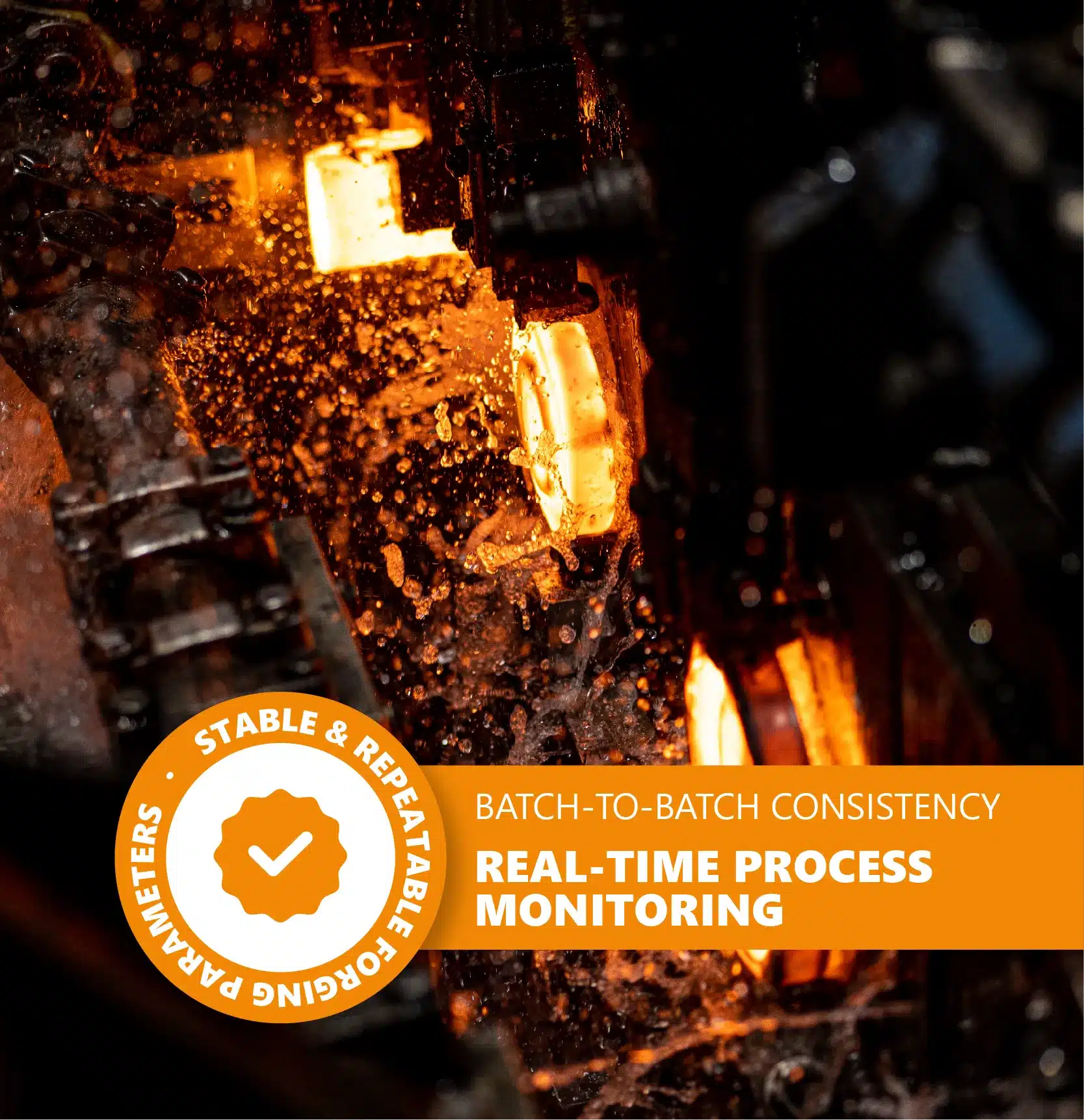
Die forging relies on defined, reproducible parameters: billet temperature, positioning, transfer times, blow energy, and forming force. This control ensures excellent dimensional and metallurgical consistency from part to part, even across large production runs.
Modern lines combine automation, robotic handling, and production data monitoring. Monitoring temperatures, forces, and displacements enables process deviations to be detected quickly and helps optimize quality, cycle times, and die life, while improving overall process stability.
Hot forging at setforge
With over 100 years of experience, Setforge draws on six specialized companies: Setforge Gauvin, Setforge L'Horme, Setforge Bouzonville, Setforge Estamfor, Setforge La Clayette, and Setforge Hot Formers. Their complementary capabilities enable the production of parts ranging from 0.1 to 1,500 kg, from prototypes to very high-volume automotive production.
Our industrial equipment includes drop hammers, counterblow hammers, and mechanical, hydraulic, and screw presses. This diversity allows the process to be adapted to the weight, geometry, material, and production volume of each project, across a wide range of steels, aluminum alloys, titanium, and superalloys.
Our teams support customers from co-development and simulation through forging, heat treatment, inspection, and machining, carried out in-house or with qualified partners. The deployment of robotic lines, connected sensors, and data analysis tools supports our energy efficiency objectives, in line with our ambition to make forging increasingly low-carbon and to reduce the environmental impact of our activities.
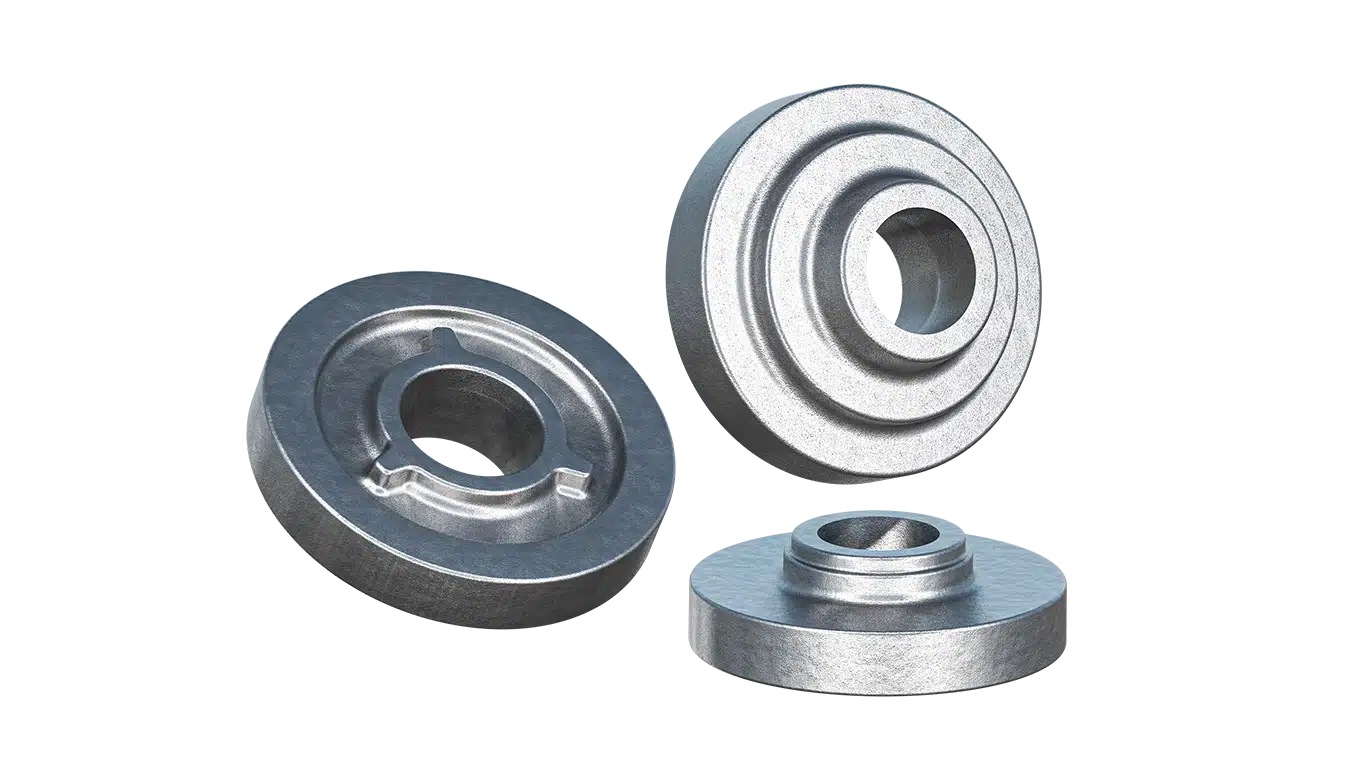
PINIONS
Steel
Automotive
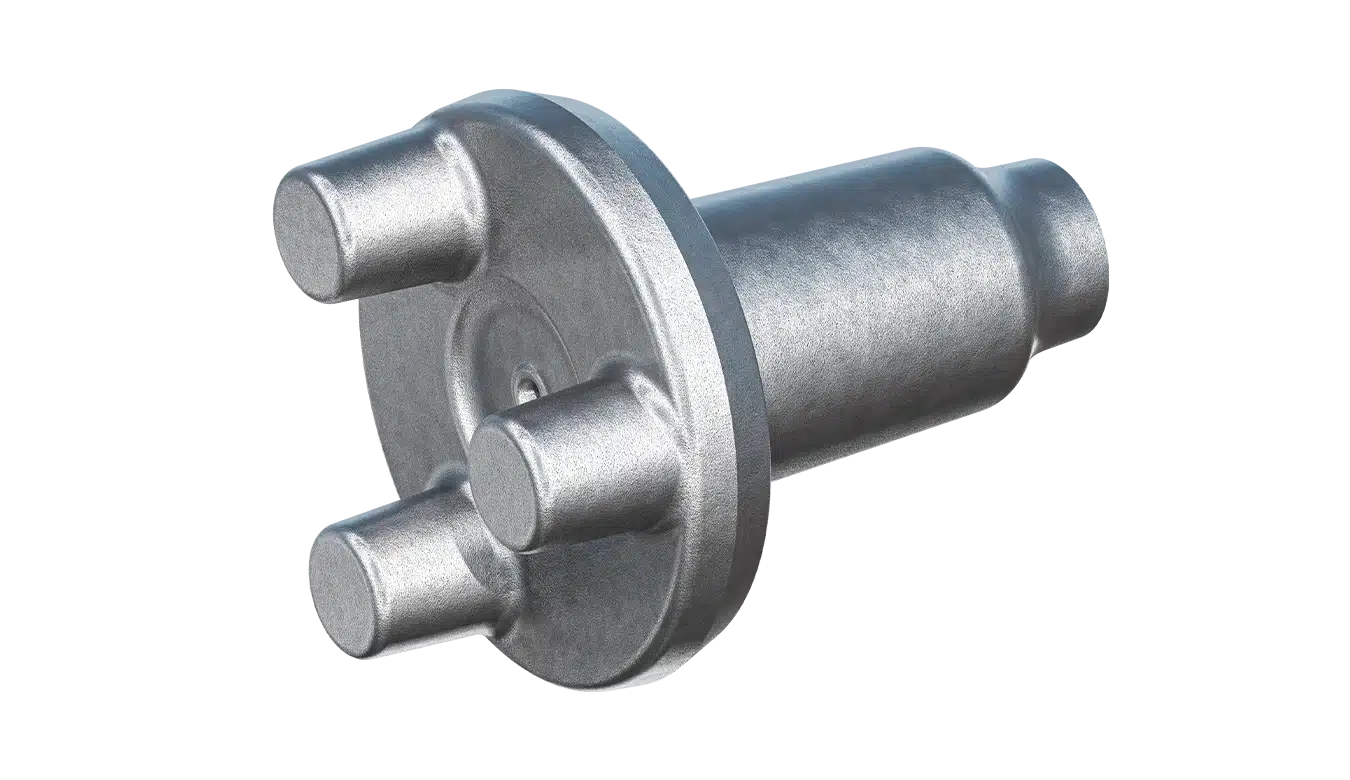
PLANET CARRIER
Steel
Mining
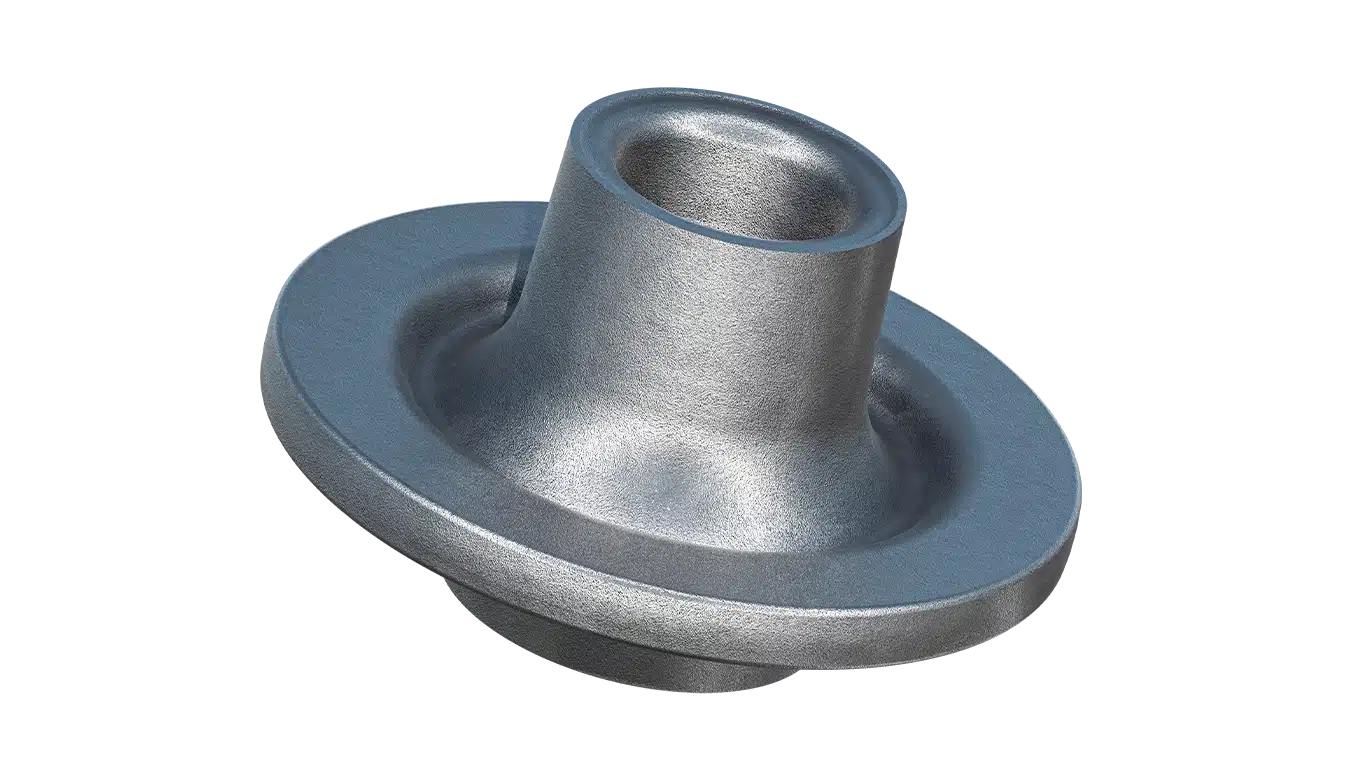
HUB
Steel
Construction
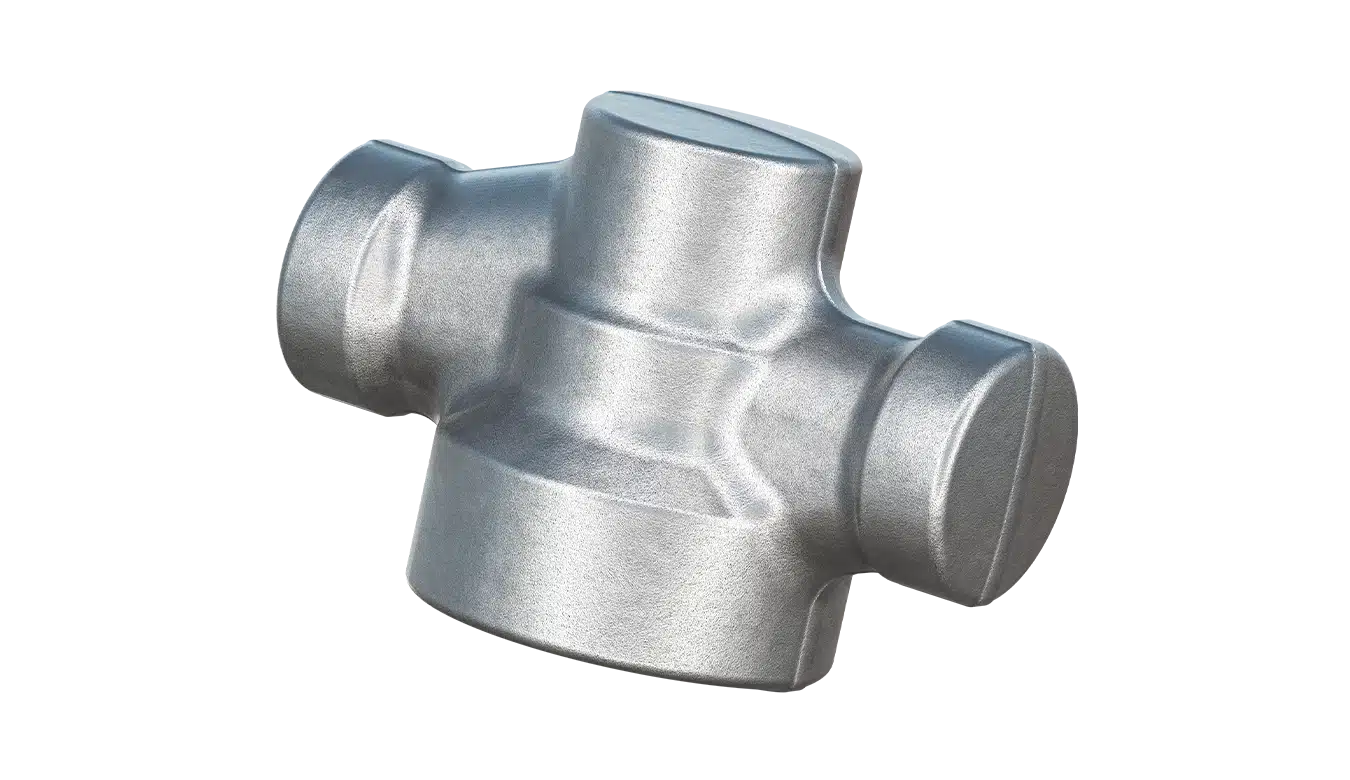
BODY VALVE
Stainless Steel
Energy
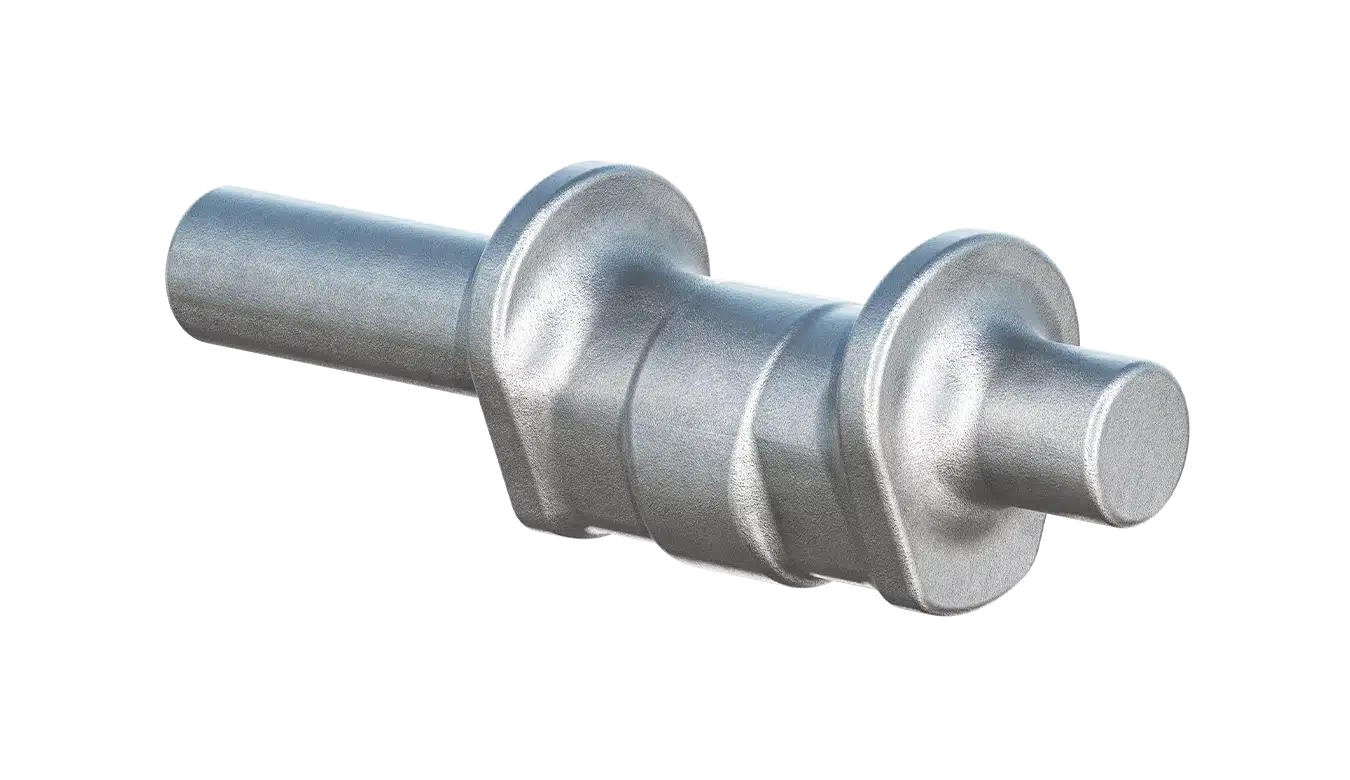
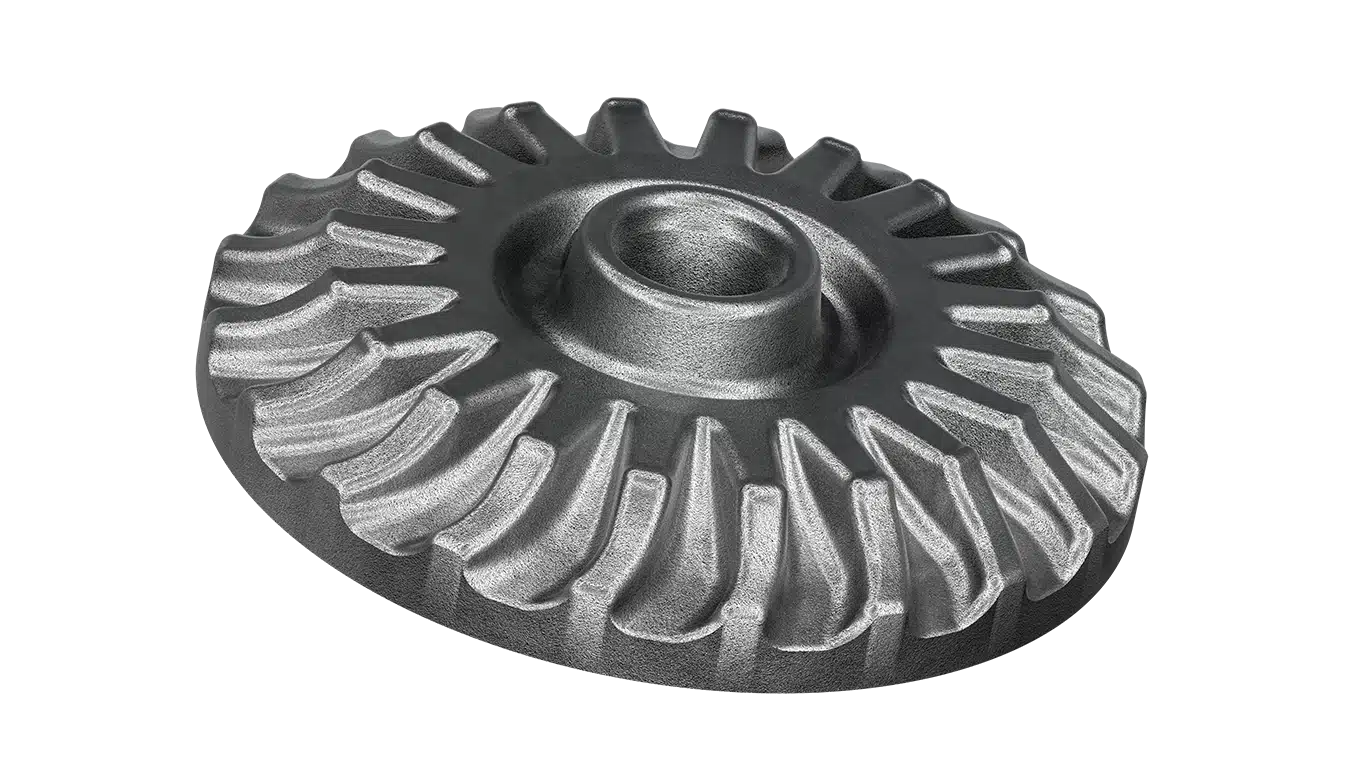
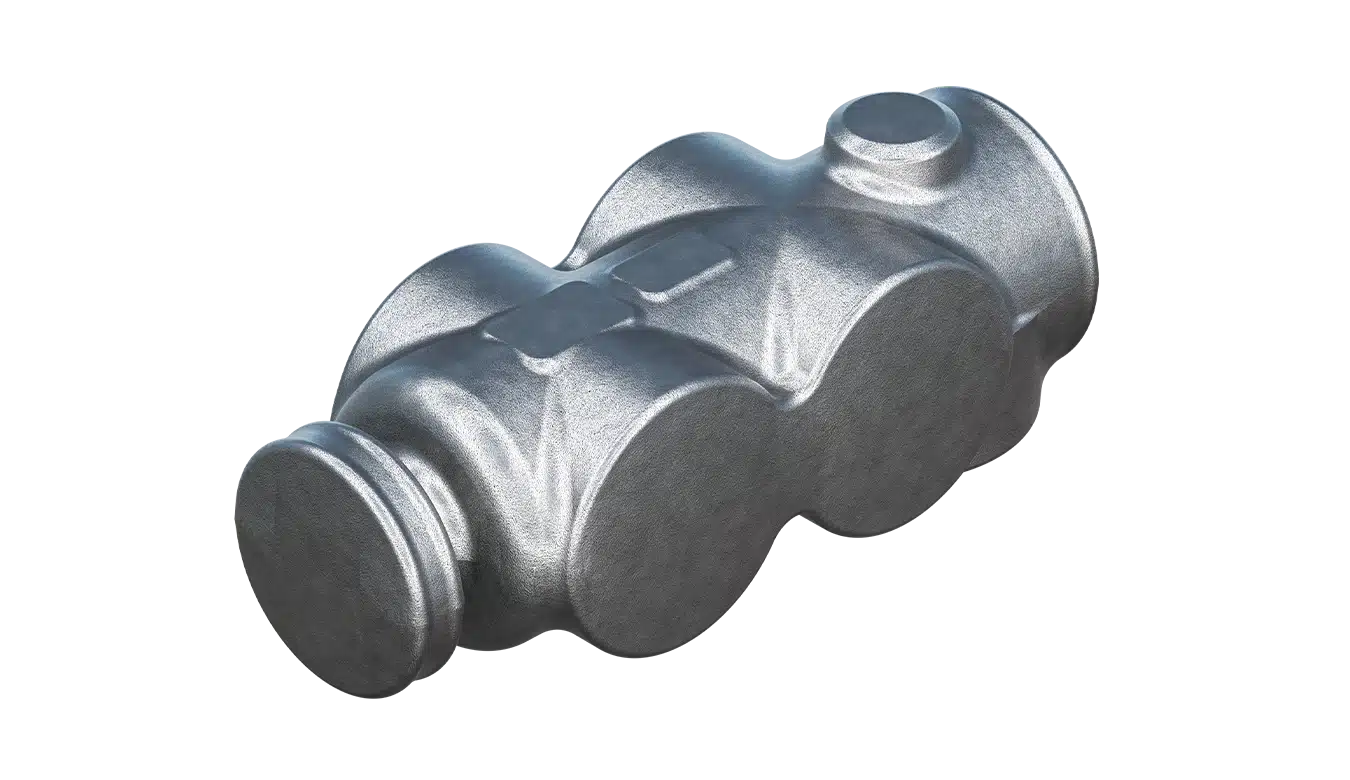
WOULD YOU LIKE TO KNOW MORE?
LET’S TALK ABOUT IT!
OUR FORGING PROCESSES
Setforge forges parts from 0.1 kg to 1,500 kg across the full range of closed-die forging processes. A breadth of capability that is, quite simply, unique in the market. From prototype to high-volume automotive production, our approach goes well beyond the forge itself: we work alongside our customers from the earliest stages of co-development through to finishing operations, covering every step of the journey from design intent to finished part.
Deep dive into the geometries we forge!
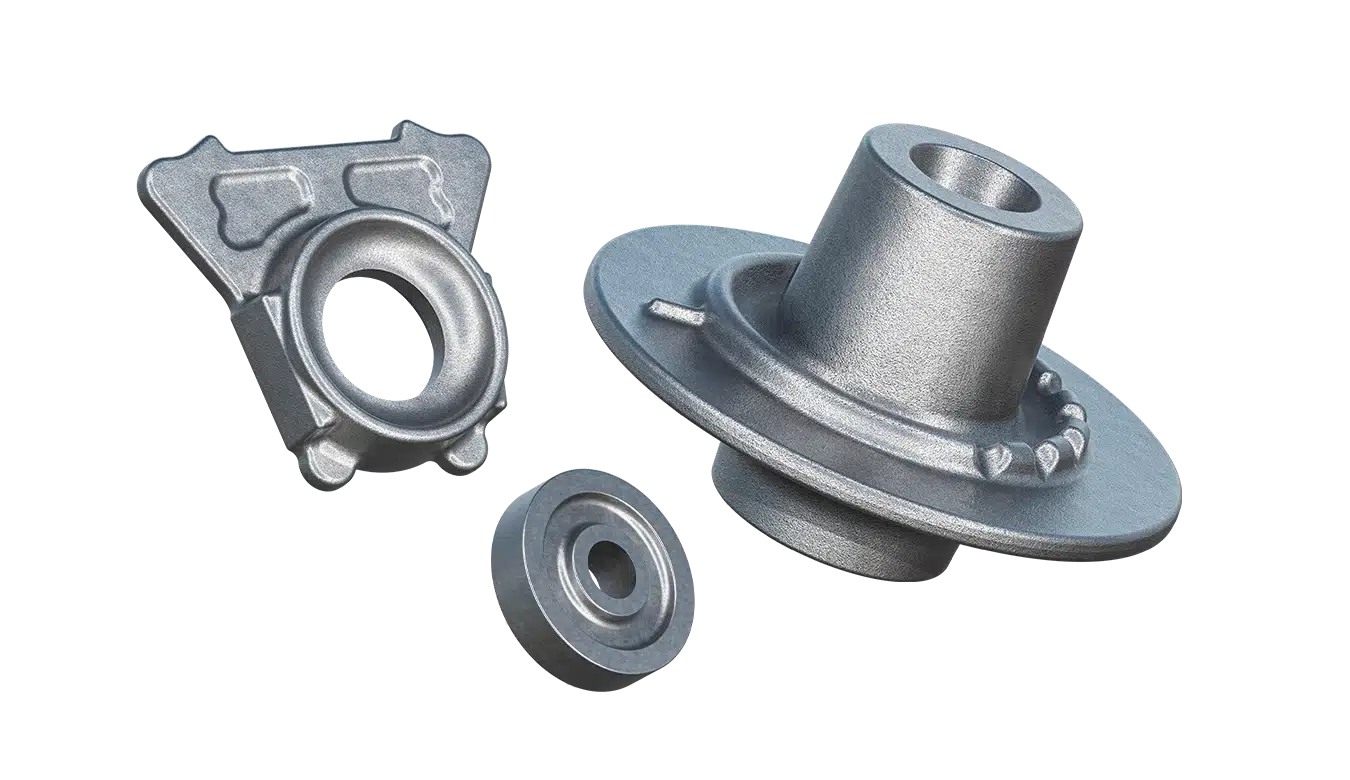
HOT FORGING
From 0.2 kg to 1,500 kg
Suitable for a wide range of complex shapes. Max weight: Steel 1,500 kg | Stainless Steel 1,400 kg | Ti and Ni-based 200 kg.
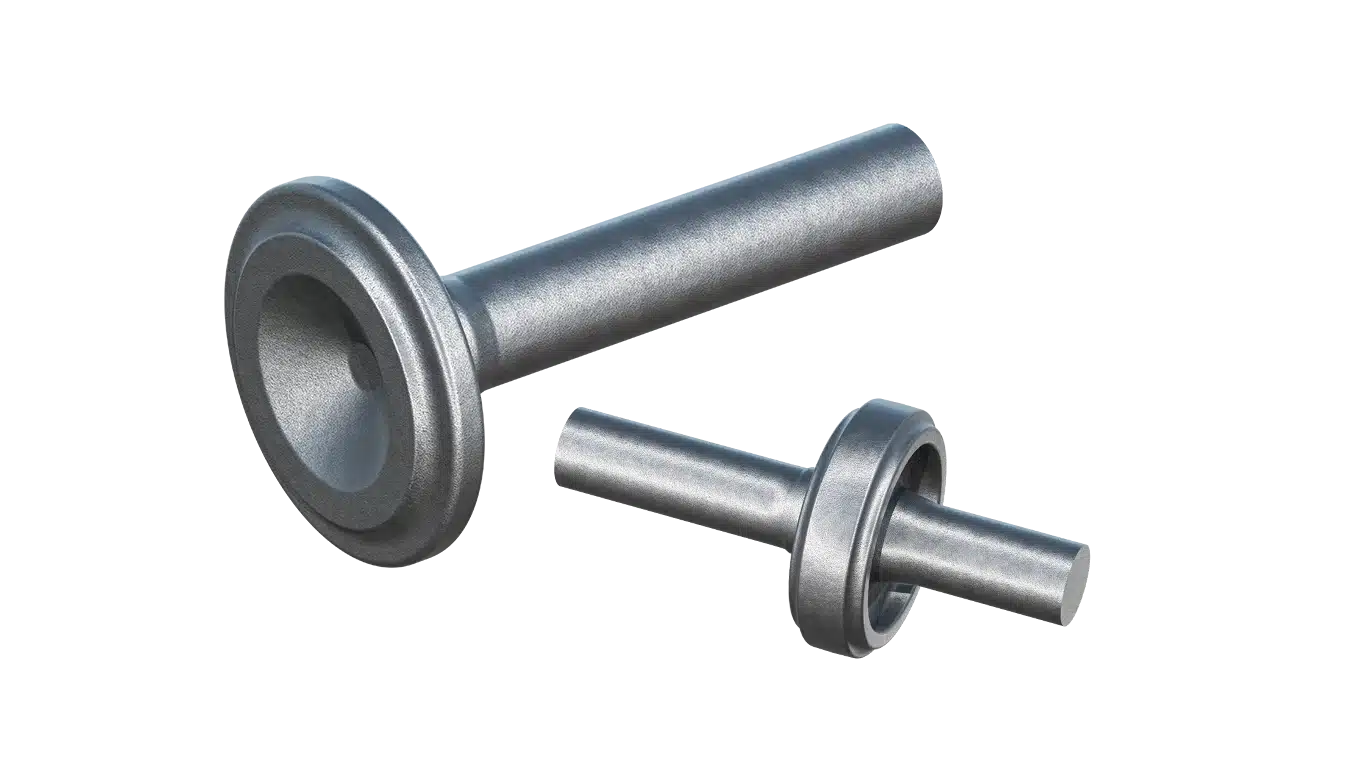
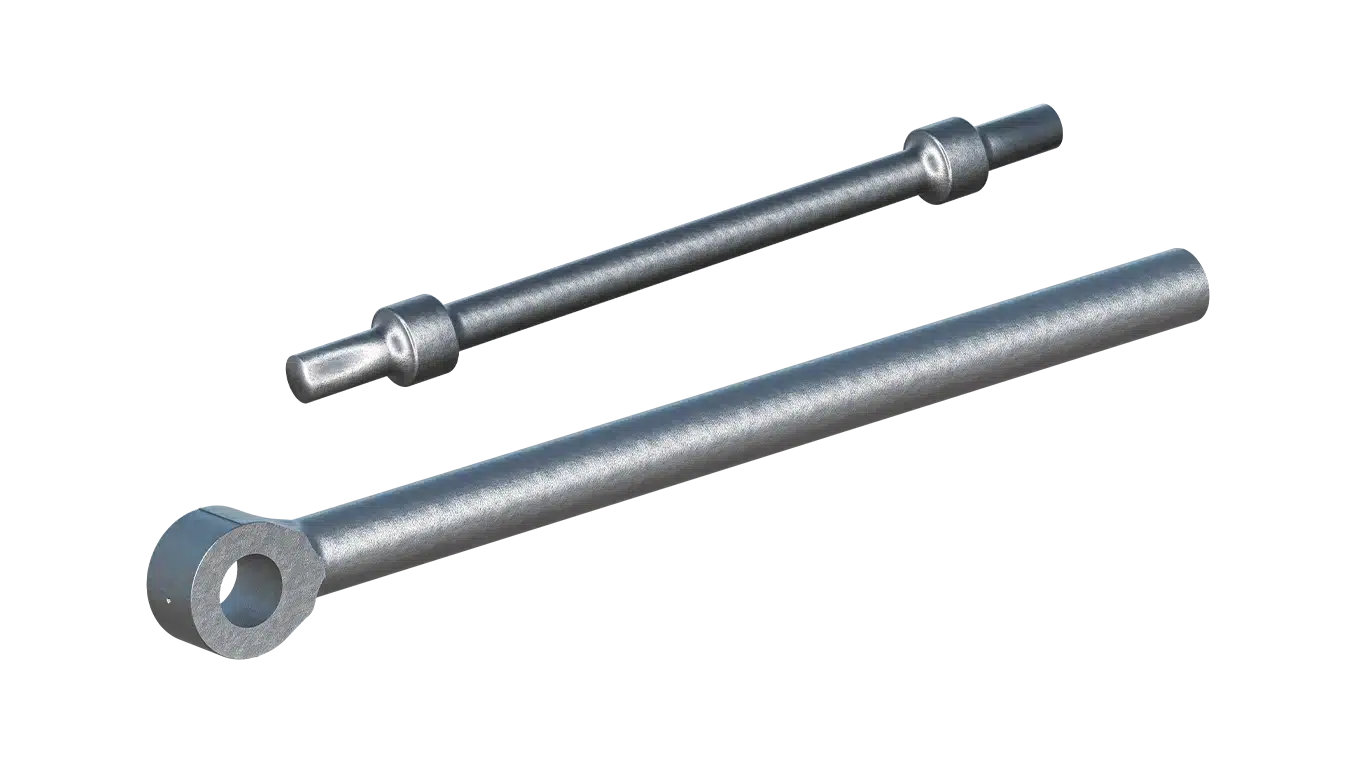
ELECTRICAL UPSETTING
From 0.1 kg to 200 kg
Long parts with flange up to 1,200 mm length, flanged diameter up to 450 mm and initial bar diameter up to 130 mm.
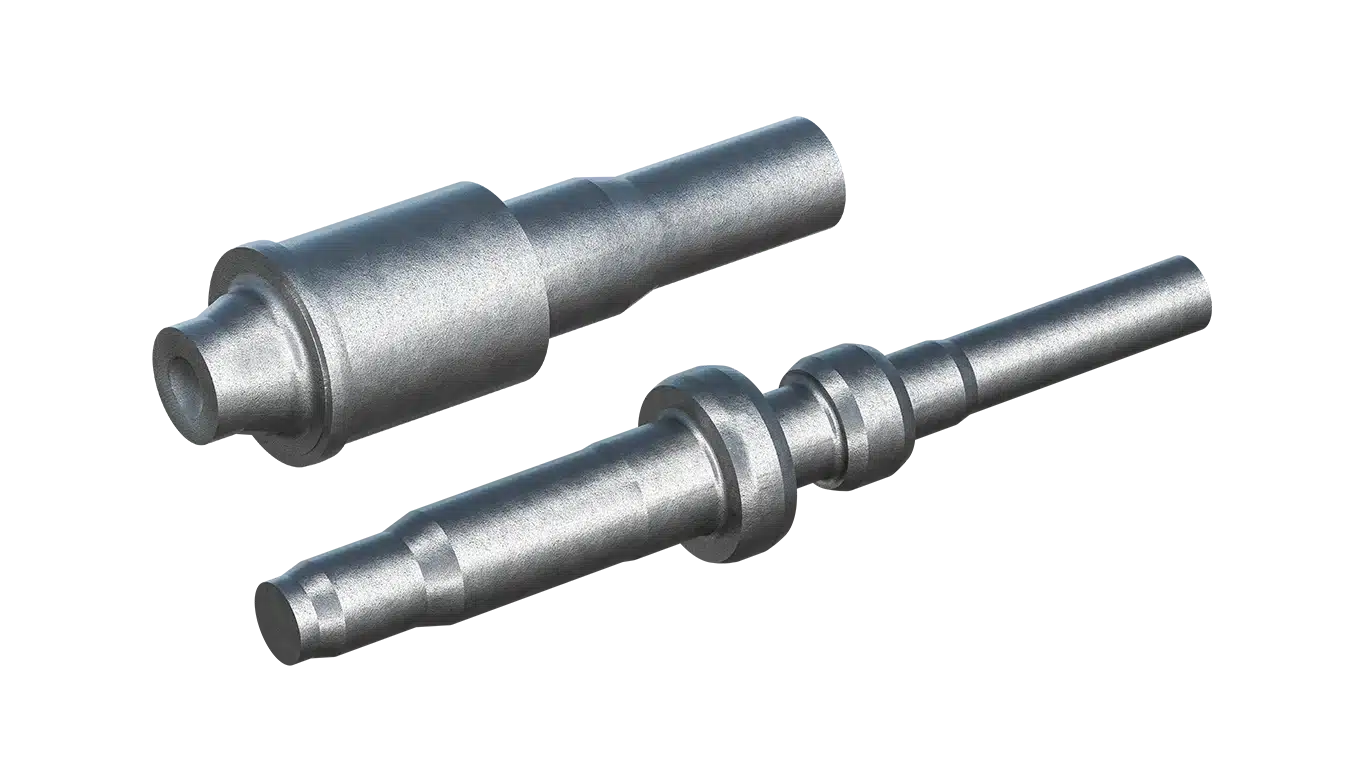
UPSET FORGING
From 2 kg to 600 kg
Long parts with complex head geometry up to 5,000 mm length, head diameter up to 400 mm and initial bar diameter up to 170 mm.
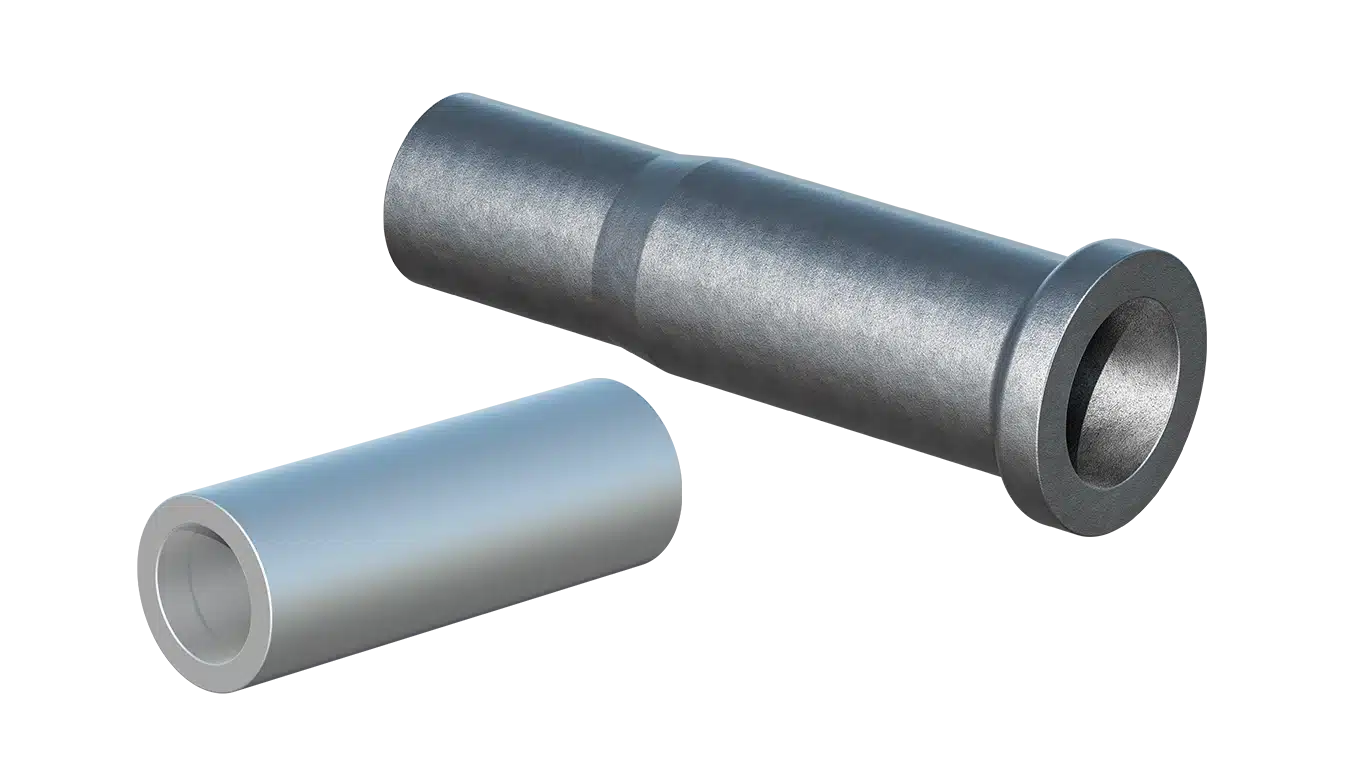
COLD FORGING
From 0.3 kg to 25 kg
Various shafts or long parts with max diameter up to 120 mm and 800 mm length.
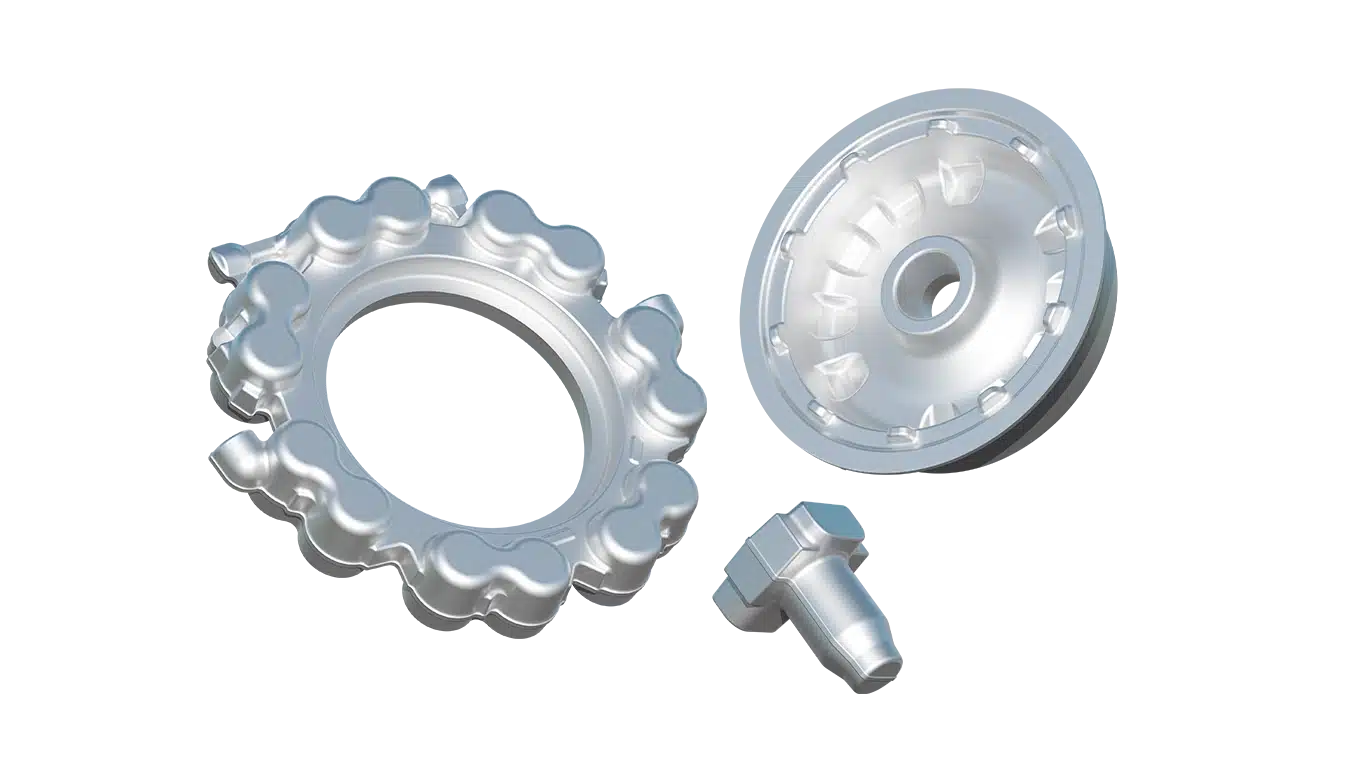
HOT EXTRUSION
Up to 1,500 kg
Tubular and shaft profile, straight or shaped, with or without hot piercing with O/D max 500 mm and length max 1,700 mm.
ALUMINUM FORGING
From 0.1 kg to 200 kg
Suitable for a wide range of complex shapes from the 1XXX to the 7XXX series depending on shape geometry.
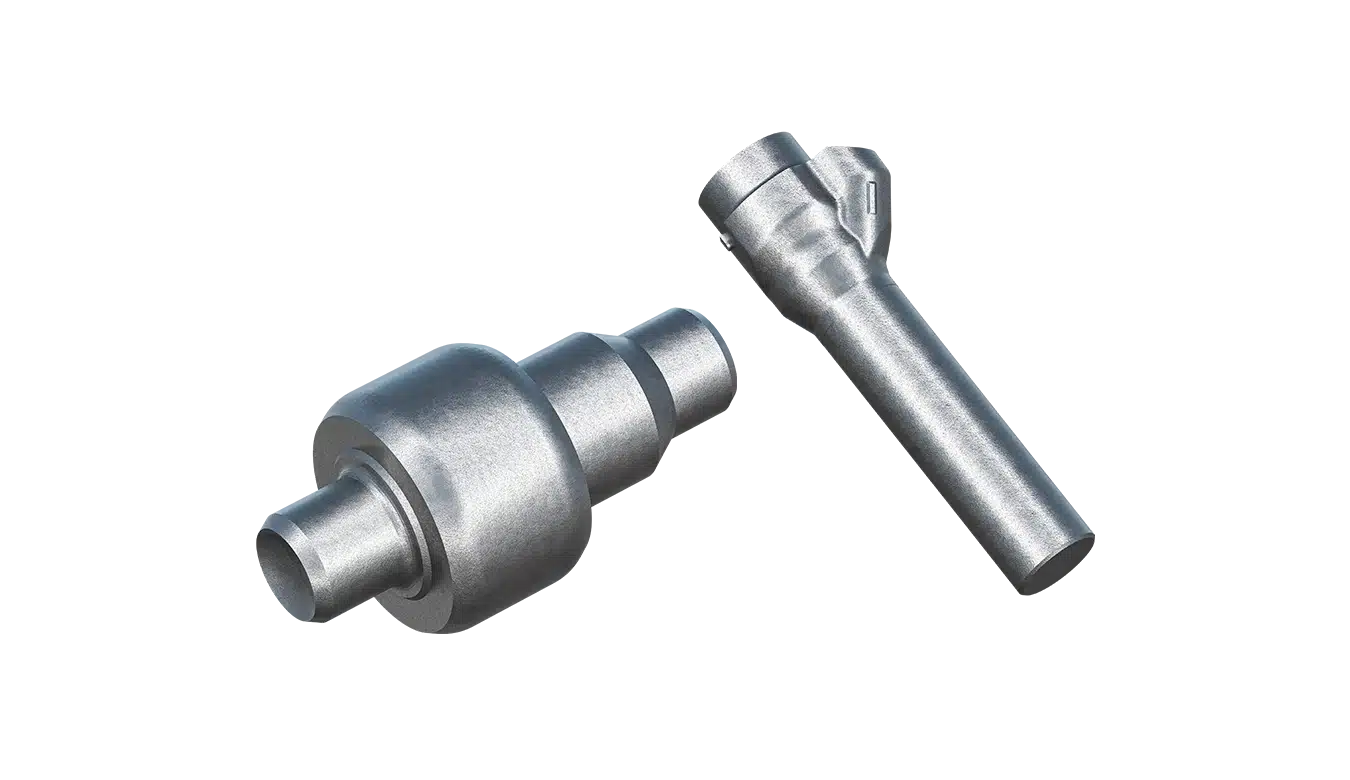
WARM FORGING
Up to 4 kg
Various parts with diameter up to 130 mm and length up to 450 mm.
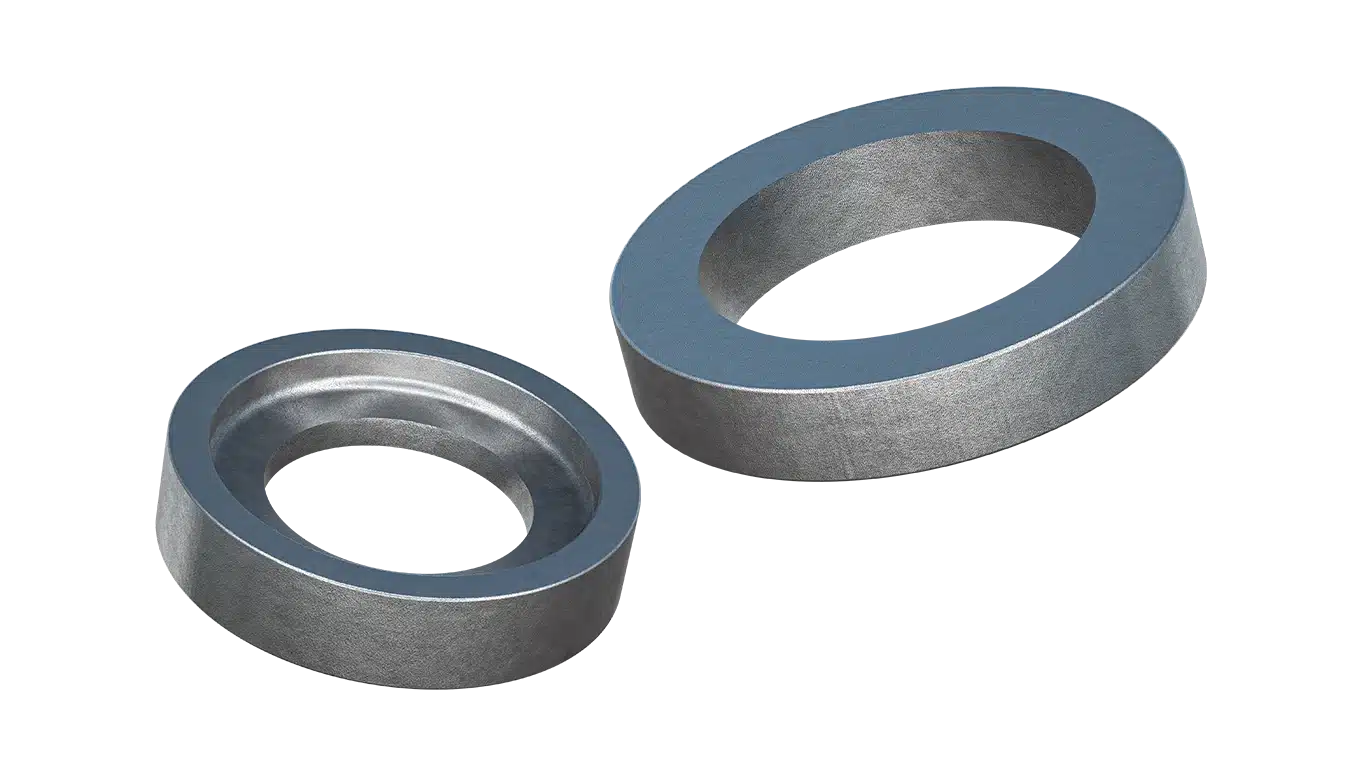
RING ROLLING
Up to 12 kg
Rings and crowns with various cross section geometries up to 250 mm diameter.
A 360° APPROACH
Over the years, we have developed genuine expertise across every discipline that a forged component requires: from early-stage engineering and tooling design to heat treatment and machining operations. Each of these capabilities has been built up through real industrial experience, working closely with OEMs, international Tier 1 suppliers, and machining partners. The result is a partner who understands the full chain, anticipates the constraints at each step, and stays involved from the first technical discussion to the final delivery.
Explore the full range of our capabilities !
On our Blog
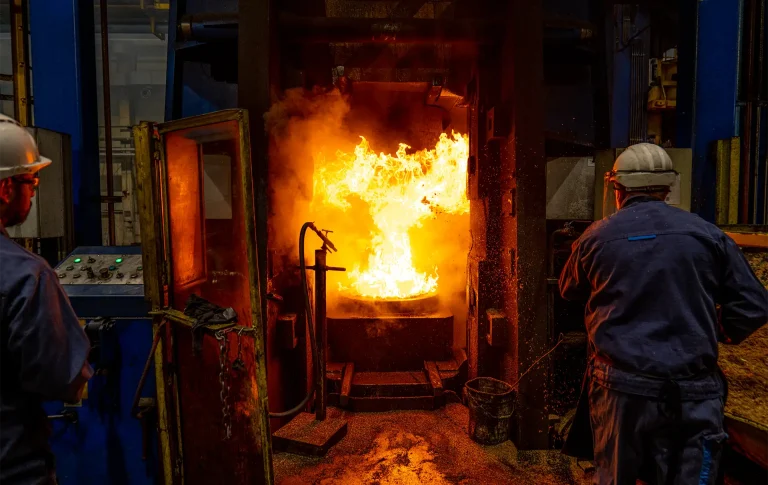
Cold forging vs. Hot forging: which process fits your part?
31/07/2026
Forging is a manufacturing process, which shapes a solid-phase metal workpiece by applying compressive forces on it.
Read More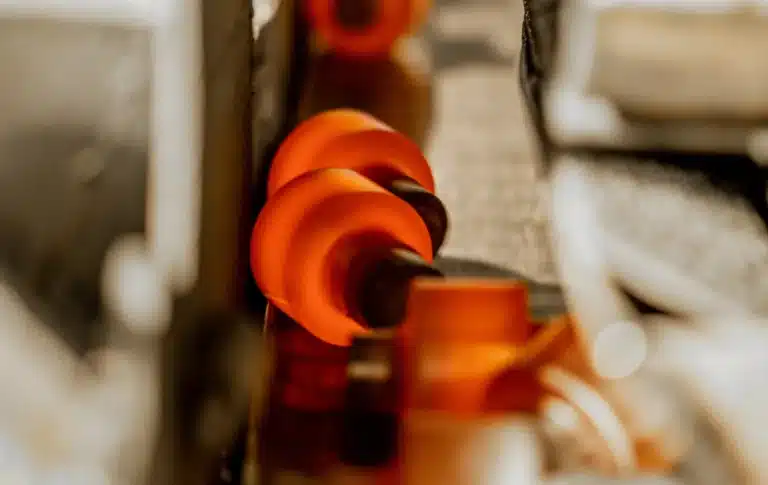
Developing a quality warm forging process
10/03/2026
Thanks to the automotive industry and its continuous development towards better, lighter and more cost efficient components, warm forging has gained greater importance. Alone or as a part of specia...
Read More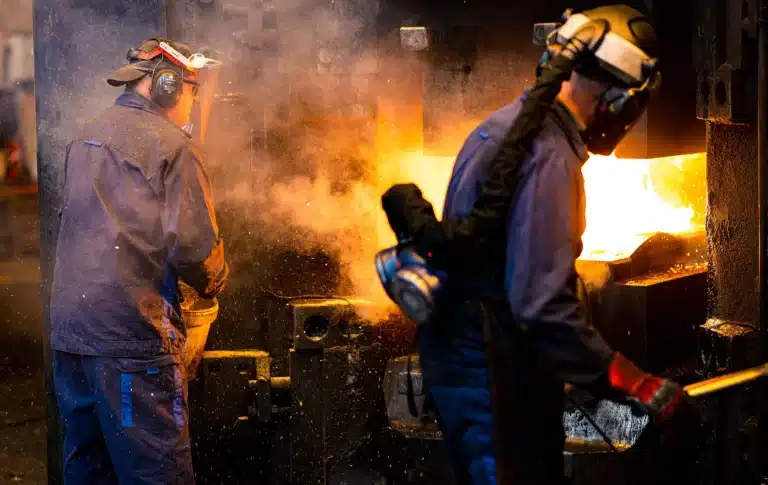
The undoubted advantages of the process
10/03/2026
Forging is classified in hot, warm and cold, according to the temperature at which is performed.
Read More